How Much Do Full, Partial, and Implant-Supported Dentures Cost?
August 5, 2026
Full Dentures Cost per Arch

Full dentures cost $1,500 to $3,600 per arch, partial dentures run $1,300 to $4,200, and implant-supported dentures typically cost $6,200 to $15,000 or more per arch.National cost data published by Care Credit places removable dentures between $452 for economy models and $6,514 for premium sets.

Those ranges are wide because the material, the number of arches, and any preparatory work change the math for every mouth. The sections below break each denture type down line by line, so you can read any quote and know exactly what you are paying for.

How Much Do Full Dentures Cost per Arch?

A conventional full denture costs $1,500 to $2,500 per arch, an economy model runs $500 to $1,200, and a premium custom set costs $2,000 to $3,600, based on 2026 per-arch pricing benchmarks published in May 2026. Nationally, CareCredit reports that removable dentures span $452 to $6,514, figures drawn from a cost study conducted by ASQ360° for Synchrony in 2023 and 2024.

Two details matter when you read a quote. First, nearly every practice prices dentures per arch, not per set, so a "$499 denture" advertisement covers one plate and a full mouth roughly doubles the number. Second, an immediate denture, which is placed the same day your teeth are removed, runs $1,800 to $3,000 per arch and still needs a reline or remake once your gums finish healing.

The base acrylic, the quality of the artificial teeth, and the amount of custom shading separate an economy plate from a premium one. Better materials resist staining, fit more precisely, and look more like natural enamel.

One more budgeting note: dentures are priced independently of the tooth removals that may precede them. If several failing teeth must come out first, those extractions belong in your total even though they never appear on the denture line, and the same goes for the exam and imaging that precede any well-made appliance.

How Much Do Partial Dentures Cost?

Partial dentures with a resin base average $1,738, ranging from $1,333 to $3,283, while cast metal partial dentures average $2,229 and can reach $4,203, according to the same ASQ360° cost study published by CareCredit. Flexible nylon partials usually land between those two tiers.

The framework drives the price. Acrylic partials cost the least but feel bulkier, cast metal frameworks cost more yet last longer and grip remaining teeth with precision clasps, and flexible nylon trades metal clasps for gum-colored arms that many patients find more comfortable and more discreet.

The number of teeth being replaced matters less than most patients expect. A partial replacing three teeth and a partial replacing seven often sit within a few hundred dollars of each other, because the framework and lab work make up most of the fee. Repairs matter too: a metal framework can be adjusted for years, while a cracked acrylic base often means a remake. You can see how we build and fit both appliances on our full and partial denture services page.

What Do Implant-Supported Dentures Cost?

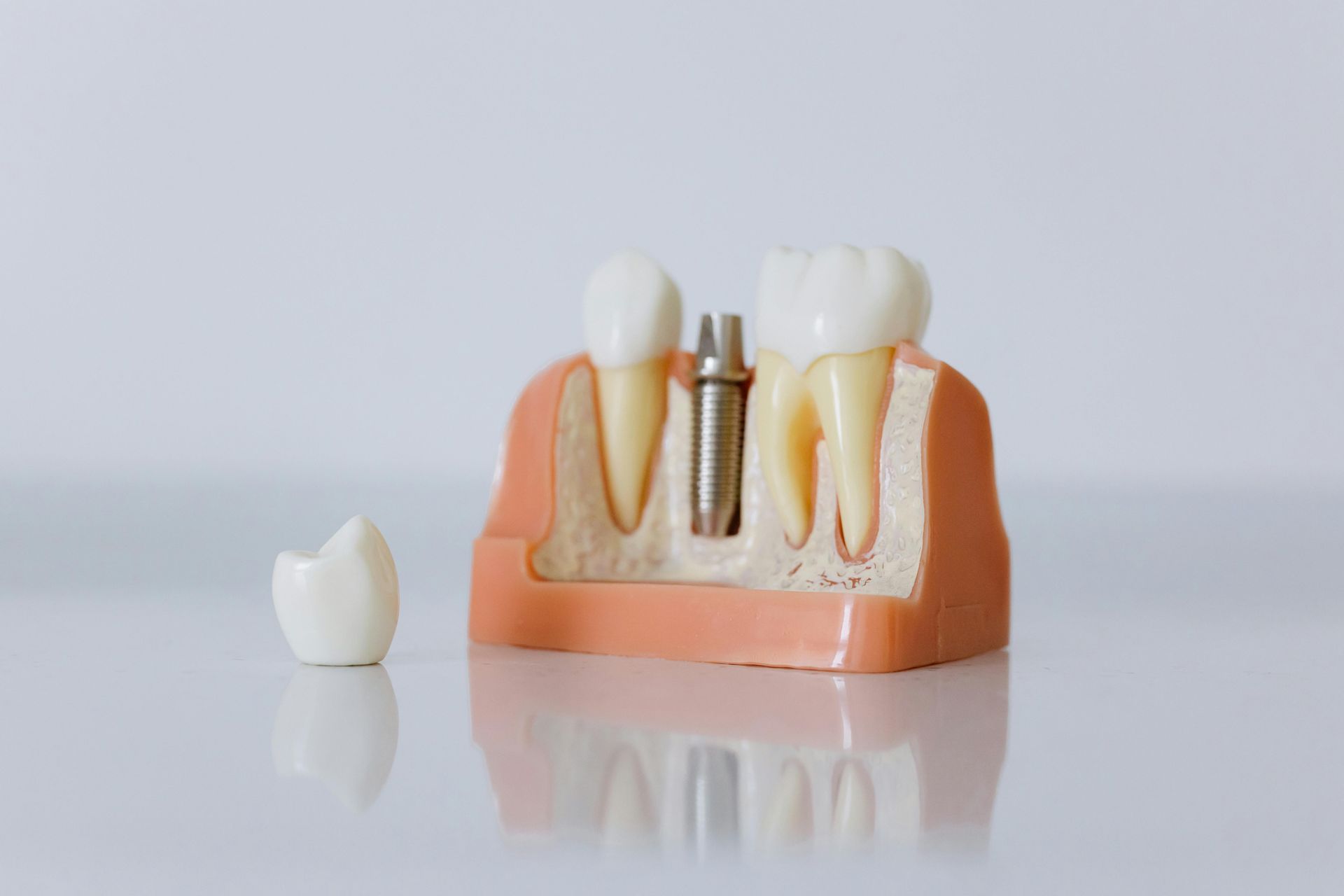
Implant-supported dentures cost roughly $6,200 to $15,000 or more per arch once you combine the appliance with the posts that anchor it.The Senior List's July 2026 denture cost guide  prices the implant denture appliance at $3,000 to $7,300 on its own, with standard implants adding $1,600 to $2,200 each.

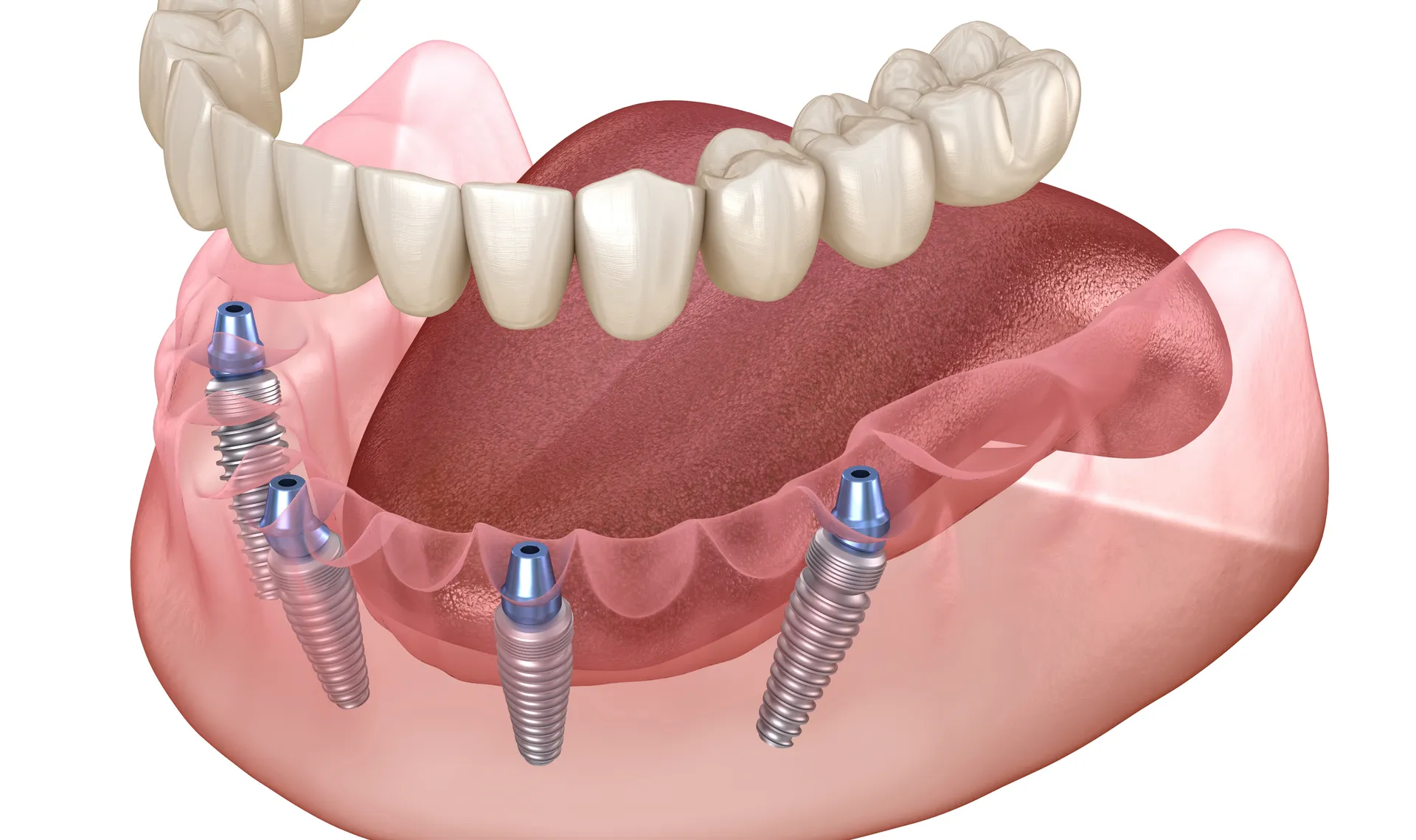
Run the math and the structure of the price becomes clear. A snap-in denture retained by two implants totals about $6,200 to $11,700, a four-implant version climbs several thousand dollars higher, and a fixed full-arch appliance, the kind used inAll-on-4 implant treatment, typically runs $8,000 to $15,000 or more per arch.

You are paying for surgery, titanium components, and 3D treatment planning on top of the denture itself. In return, the appliance stops slipping, chewing force rises sharply, and the implants stimulate the jawbone the way natural roots do, which slows the bone shrinkage that forces traditional dentures to be relined again and again.

Candidacy still matters. Adequate bone must be present, or grafted, before posts are placed, which is why a trustworthy implant-supported quote follows 3D imaging rather than precedes it.


What Does a Denture Quote Include, and What Costs Extra?

A standard denture quote covers the appliance itself, while extractions, imaging, temporary appliances, and future relines are usually billed as separate line items. The table below shows where the money actually goes across a full decade of ownership, which is the comparison most price lists skip.


Denture type Typical upfront price (per arch) Usually billed separately Typical ongoing costs, years 1 to 10
Conventional full denture $1,500 to $2,500 Extractions (about $177 per simple tooth), exam with X-rays (about $203), temporary denture Relines of $200 to $600 every 1 to 2 years, plus a full replacement around years 5 to 7
Cast metal partial denture $2,229 average Extractions, exam and imaging, clasp adjustments Periodic relines and clasp repairs, replacement around years 5 to 8
Snap-in implant denture (2 implants) $6,200 to $11,700 Bone grafting if needed, sedation, 3D imaging Replacement of the attachment inserts every 1 to 2 years, new appliance around year 10
Fixed implant-supported denture $8,000 to $15,000+ Extractions, grafting, sedation Professional cleanings and occasional prosthetic maintenance

That last column changes the ranking. A conventional full denture that needs a $200 to $600 reline every year or two, per MedicalCostInfo's March 2026 pricing data, plus a full replacement within five to seven years, can approach the lifetime spend of a snap-in implant denture that started at three times the price. The cheapest denture on day one is rarely the cheapest denture by year ten. The extraction and exam averages above come from the same CareCredit cost study cited earlier.

How Can You Lower Your Out-of-Pocket Denture Costs?

The fastest ways to lower your denture costs are using dental insurance that classifies dentures as major restorative work, paying with pre-tax HSA or FSA dollars, and spreading the balance across interest-free monthly installments. Each one attacks a different part of the bill.

Most private dental plans pay 40 to 50 percent of a denture after your deductible, but a $1,000 to $2,500 annual maximum usually caps the benefit, and many policies add a waiting period plus a five to eight year frequency limit between replacements. Asking your dentist for a pre-treatment estimate submitted to your insurer tells you the real coverage number before you commit.

Original Medicare does not cover dentures at all, though some Medicare Advantage plans include a dental allowance that offsets part of the cost. Dentures also qualify as an IRS-eligible medical expense, so HSA and FSA dollars reduce the true cost by your tax rate. Our financial options page and monthly payment plans cover the remaining balance without a lump-sum hit.

Coverage rules shift by plan, employer, and state, so confirm every figure in writing with both your insurer and your dentist before treatment begins, and treat any quote given without an exam as an estimate rather than a promise.

How Does Spark Dental Price Denture Treatment in North Richland Hills?

At Spark Dental, every denture case begins with an exam, digital X-rays, and an intraoral scan, and ends with a written, itemized estimate you approve before any work starts. Dr. Deepika Verma builds the quote around your mouth, not a menu: how many teeth remain, how healthy the gums and bone are, and whether a partial, a full denture, or an implant-retained appliance will serve you longest.

Because full and partial dentures, dental implants, and All-on-4 treatment are all handled under one roof, you are never shuffled between offices with separate bills. We serve patients from North Richland Hills and the neighboring communities of Richland Hills, Hurst, Bedford, Haltom City, Watauga, Fort Worth, and Colleyville. If you are still weighing a bridge or a single implant against a denture, our side-by-side guide to every tooth replacement option and what each one costs walks through the alternatives in the same plain-numbers style.

What Else Do Patients Ask About Denture Prices?

Why do partial dentures vary so much in price?

The framework material sets the price. Resin-based partial dentures average $1,738 nationally, cast metal frameworks average $2,229 and can exceed $4,200 with precision attachments, and flexible nylon sits between them. Clasp design, the number of replacement teeth, and lab quality account for the rest of the spread.

Are snap-in dentures cheaper than fixed implant-supported dentures?

Yes. A snap-in denture on two implants totals roughly $6,200 to $11,700 per arch, while a fixed implant-supported denture runs $8,000 to $15,000 or more. The snap-in version is removable for cleaning and uses fewer implants, which is exactly why it costs less than a permanently attached arch.

Does Medicare pay for dentures?

Original Medicare, Parts A and B, does not cover dentures or routine dental care. Some Medicare Advantage plans include a dental allowance that pays part of the cost, and state Medicaid programs vary widely in adult denture coverage. Confirm your specific plan's benefit in writing before scheduling treatment.

How much should you budget each year to maintain dentures?

Plan on a reline of $200 to $600 every one to two years, plus small recurring costs for adhesives, cleansers, and occasional repairs. Removable dentures also need full replacement roughly every five to seven years, so setting aside a few hundred dollars annually keeps the eventual bill from surprising you.

Do immediate dentures cost more than conventional ones?

An immediate denture runs $1,800 to $3,000 per arch, which overlaps the upper end of conventional pricing, and it carries a built-in second cost. Because your gums shrink while healing, the appliance needs a reline or a remake within months, so budget for that follow-up from the start.

What Is the Smartest Way to Budget for New Dentures?

The smartest way to budget for dentures is to compare the ten-year ownership cost of each type, not the sticker price, then lock in an itemized written quote before you commit to anything. A $1,900 full denture and an $8,000 fixed implant arch can land far closer together than their price tags suggest once relines, remakes, and replacements enter the ledger. Bring your insurance card, your timeline, and your questions to the consultation, because the right denture is the one you can afford to maintain, not just the one you can afford to buy.

Ready for exact numbers instead of national ranges? Call Spark Dental at (817) 962-7072, visit us at 7259 Boulevard 26, North Richland Hills, TX 76180, or book your consultation online. Dr. Verma and our team will examine your mouth, verify your insurance benefits, and put every denture path, with its full cost, on one page for you.

Disclaimer

Please note that the dollar amounts and price ranges listed in this article are national averages and estimates for educational purposes only. They do not represent exact or guaranteed costs for actual treatment. Final individual treatment costs can vary depending on clinical evaluation, personal oral health needs, insurance benefits, and chosen materials. 

Dental Bridge Cost
By Amit Verma August 4, 2026
Learn what a porcelain or Maryland dental bridge costs, what affects pricing, and how to choose the best tooth replacement option for your smile.
Tooth Replacement
July 13, 2026
Compare tooth replacement options, costs, and lifespans. Learn about dental implants, bridges, dentures, and All-on-4 solutions to find the right choice.
June 23, 2026
A dental emergency is any mouth problem that needs prompt professional care to control bleeding, stop severe pain, save a tooth, or treat a spreading infection. Knowing the difference between a true emergency and a problem that can wait until morning protects both your teeth and your budget. This guide walks North Richland Hills families through what to do, what to avoid, and when to call. At Spark Dental , same-day slots are kept open for exactly these moments, because the first thirty minutes often decide the outcome. What Counts as a True Dental Emergency A handful of situations need attention within hours, not days. The clearest warning signs are severe or worsening pain, a knocked-out or loosened tooth, a cracked or broken tooth, facial swelling, bleeding that will not stop, and any mouth injury paired with a fever. Pain that keeps you awake, throbs, or radiates toward the jaw or ear usually points to an exposed nerve or an infection, and neither of those resolves on its own. When you are unsure, the safest move is a quick phone call to your dentist, who can triage your symptoms in a couple of minutes. Not everything that feels alarming is urgent, though. A small chip with no pain, a dull ache that comes and goes, or food wedged between two teeth can usually wait for a scheduled visit. The table below sorts the most common situations North Richland Hills families ask about. Emergency or Can It Wait? A Quick Reference Knocked-out adult tooth Emergency: within 30 to 60 minutes Keep it moist in milk, then call right away Severe toothache with facial swelling Emergency: same day Likely infection; call your dentist now Cracked or broken tooth with pain Urgent: same or next day Rinse with warm water, use a cold compress, call Lost filling or crown, mild discomfort Urgent: 1 to 2 days Cover the area with dental wax, then call Chipped tooth, no pain Routine Book a regular appointment Dull ache that comes and goes Routine Schedule an exam to find the cause Object stuck between teeth Self-care first Floss gently; call if it does not clear What to Do If a Tooth Is Knocked Out A knocked-out permanent tooth is one of the few dental injuries where minutes genuinely matter. According to the American Association of Endodontists , more than five million teeth are knocked out every year in children and adults, and many of them can be saved with fast, correct handling. The steps are simple but specific. Pick the tooth up by the crown, which is the chewing surface, and never touch the root. Rinse it gently with water or milk to remove dirt, but do not scrub it, dry it, or wrap it in tissue. If you can, place it back in the socket and bite down on clean gauze to hold it. If reseating it is not possible, keep it moist: the ADA recommends storing it in milk, tucking it between your cheek and gums, or using a tooth-preservation product that carries the ADA Seal of Acceptance. Then get to a dentist within thirty minutes if you can. Milk works better than tap water because its proteins and balanced pH help keep the root surface cells alive, and a tooth that has been out of the socket for less than an hour has the best chance of being replanted successfully. One important exception: a knocked-out baby tooth should not be put back, because that can damage the developing permanent tooth underneath. A successfully replanted adult tooth is often stabilized and may later need a root canal to stay healthy. Handling Other Common Emergencies Most dental injuries are not avulsions. The AAE notes that chipped and cracked teeth make up the majority of dental trauma, and how you respond in the first hour still matters. For a cracked or broken tooth, rinse your mouth with warm water, apply a cold compress to control swelling, and save any fragments. Depending on the damage, the tooth may be rebuilt with a tooth-colored filling or capped with a porcelain crown . For a lost filling or crown, cover the exposed area with dental wax or sugar-free gum and avoid chewing on that side until you are seen. Facial swelling or a painful, pimple-like bump on the gum can signal an abscess, which is a serious infection that will not clear without treatment and can spread if ignored. Rinse with warm salt water for temporary relief, never try to lance it yourself, and call the same day. Gum-related infections are treated with periodontal therapy alongside any urgent care. If you bite your lip, tongue, or cheek, clean the area, apply gentle pressure with gauze, and use a cold compress. One more tip from the ADA: never place aspirin directly on a sore tooth or gum, since it can burn the soft tissue. When to Go to the ER Instead A dentist is the right place for almost every tooth problem, but a few situations call for a hospital emergency room first. Go straight to the ER if swelling is affecting your breathing or swallowing, if it is spreading toward your eye or down your neck, if bleeding will not stop, or if you have a suspected broken jaw or major facial trauma. The ER can manage swelling, bleeding, and pain and rule out a larger injury, but it cannot fix the tooth itself, so you will still need to follow up with a dentist to treat the underlying cause. How North Richland Hills Families Can Prevent Emergencies Many urgent visits are avoidable with a few simple habits. A custom sports mouthguard is the single best protection for active kids and teens, since falls and contact sports are a leading cause of knocked-out teeth in children ages seven to eleven. If you wake with jaw soreness or notice worn, sensitive teeth, ask about a night guard for teeth grinding , which quietly cracks molars over time. Beyond appliances, the basics still win. Avoid chewing ice, hard candy, and popcorn kernels, and never use your teeth to open packaging. Most important, keep up with twice-yearly checkups: a small cavity caught early becomes a quick filling, while the same cavity ignored becomes the 2 a.m. abscess. You can see the full range of family services Spark Dental offers, all under the care of Dr. Deepika Verma . Emergency Dental Care at Spark Dental When something does go wrong, you should not have to wait days for relief. Spark Dental offers 24/7 emergency dental care for families across North Richland Hills and the neighboring communities of Richland Hills, Hurst, Bedford, Haltom City, Watauga, Fort Worth, and Colleyville. Because Dr. Verma handles root canals, crowns, fillings, and extractions in-house, most urgent problems are solved in one place rather than shuffled between offices. That continuity matters in an emergency, when a calm, familiar team and a clear treatment plan make a stressful situation far easier to manage. Flexible payment plans and financing help make sure cost is never the reason you delay care. The clinic is located at 7259 Boulevard 26, North Richland Hills, TX 76180, and the team reserves same-day appointments for genuine emergencies. If you are in pain right now, call (817) 962-7072 or request an appointment online , and describe your symptoms so the team can prioritize your visit. Frequently Asked Questions What is considered a dental emergency? A dental emergency is any problem that needs prompt care to stop severe pain, control bleeding, save a tooth, or treat infection. Knocked-out teeth, cracked or broken teeth, severe toothaches, and facial swelling all qualify. Minor chips with no pain and dull, occasional aches can usually wait for a scheduled visit. Should I go to the ER or a dentist for severe tooth pain? For most tooth pain, call a dentist first, because an emergency room can prescribe antibiotics and pain relief but cannot treat the tooth. Go to the ER only if swelling affects your breathing or swallowing, bleeding will not stop, or you have a suspected broken jaw or major facial injury. What should I do if my child knocks out a tooth? For a permanent tooth, hold it by the crown, rinse it gently, try to place it back in the socket, and keep it moist in milk if you cannot. See a dentist within thirty minutes. A knocked-out baby tooth should not be reinserted, since that can harm the permanent tooth growing underneath, but you should still call your dentist. How fast do I need to see a dentist for a broken tooth? A broken tooth with pain, sharp edges, or bleeding should be seen the same or next day to prevent infection and further damage. Rinse with warm water, use a cold compress, save any pieces, and avoid chewing on that side until your appointment. Does Spark Dental offer emergency dental care near me? Yes. Spark Dental provides 24/7 emergency dental care in North Richland Hills, TX, and the surrounding area, with same-day appointments for urgent problems. Call (817) 962-7072 or request an appointment online to be seen quickly by Dr. Deepika Verma and the team.
June 9, 2026
Learn the real cost of wisdom tooth extraction in NRH, including consultation, X-rays, procedure fees, and recovery expenses from start to finish.
 teeth grinding
June 2, 2026
North Richland Hills dentists can help manage sleep apnea and teeth grinding with custom treatments like oral appliances for better sleep and dental health.
May 27, 2026
Learn the signs you may need wisdom tooth extraction in North Richland Hills, treatment costs, recovery tips, and when to visit a dentist.
May 20, 2026
Find the right family and oral dentistry practice in North Richland Hills, TX. Learn what to look for in care, convenience, trust, and emergency support.
April 27, 2026
Need after-hours emergency dental treatment in North Richland Hills, TX? Learn where to get fast, reliable care for toothaches, injuries, and urgent dental needs.
April 22, 2026
Finding one dental office that treats your toddler, your teenager, and you shouldn't take five Google searches. In North Richland Hills, TX, families have plenty of options, with nearly 1,000 dentistry specialists practicing in or near the 76180 and 76182 ZIPs according to Healthgrades, covering everything from first cleanings to full-mouth restorations. This post walks through the dental services available to NRH families in 2026 and what separates a true family practice from one that just markets itself that way. At Spark Dental , this question comes up on almost every new-patient call. The NRH Family Landscape in 2026 North Richland Hills has a 2026 population of 72,007, with 22.4% under age 18 and 68.8% of households classified as family households. The median household income sits at $97,305, well above the Texas average, so NRH families have more capacity for elective treatments like Invisalign and implants. Texas ranks strongly for pediatric access: 80.6% of Texas children visited a dentist in the past year, and 69% of Medicaid-enrolled children receive annual dental care, the highest rate in the country. Adult utilization lags at 59.4%, which is why whole-family practices are genuinely useful: booking the kids reminds parents to book themselves. Preventive and General Dentistry A routine family visit includes plaque and tartar removal, digital X-rays (usually annually), periodontal screening, and an oral cancer check. Most offices use intraoral cameras so you can see what the dentist is seeing. Dental sealants are worth asking about for kids ages 6 to 12: they prevent more than 80% of tooth decay on molars, yet only 1 in 3 U.S. children receive them. For adults, non-surgical gum disease treatment (scaling and root planing) is standard, with referrals to a periodontist only for advanced cases. Pediatric Dental Care The ADA recommends a first visit by age 1 or within 6 months of the first tooth erupting, typically a short “ride-along” focused on parent education. Cavity prevention matters early: total caries prevalence reaches 50.5% by ages 6 to 11 nationally, and 57.1% among Hispanic youth ages 2 to 19. NRH practices address this with sealants, fluoride varnish, diet counseling, and brushing coaching. If your child has had a rough experience elsewhere, ask about tell-show-do and similar behavior guidance techniques before booking. Restorative Dentistry When a tooth is already damaged, restorative work brings it back to function: Fillings. Tooth-colored composite has replaced silver amalgam at almost every NRH practice. Same-day, no second visit. Crowns. For larger decay, cracked teeth, or after root canals. Many offices offer same-day CEREC crowns milled in-office. Bridges. Fixed replacement for one or two missing teeth, anchored to adjacent teeth. Root canals. Most NRH general dentists handle molar root canals in-house; severely curved canals get referred out. Dentures. Full or partial, conventional or implant-retained. Cosmetic Dentistry and Orthodontics With NRH's above-average household income, cosmetic demand is high. Most practices offer professional whitening (in-office Zoom/KoR and take-home trays), porcelain veneers, composite bonding, gum reshaping, and planned smile makeovers that combine multiple treatments. On the orthodontics side, most NRH family dentists now offer Invisalign in-house, and many still offer traditional braces for complex bite corrections and severe crowding. Early orthodontic evaluation is recommended by age 7. Catching a crossbite or severe crowding early can shorten treatment later and sometimes avoid tooth extractions entirely. Dental Implants and Full-Mouth Restoration For missing teeth, implants are the standard of care: a titanium post replaces the tooth root, topped with a crown, bridge, or denture. Options include single implants, implant-supported bridges, and implant-retained dentures (All-on-4 and similar full-arch solutions that eliminate the movement of traditional dentures). Not every NRH family practice places implants in-house. Some handle the full surgical and prosthetic workflow; others restore only and refer surgery to an oral surgeon. Ask which model before committing, because it affects cost, timeline, and how many offices you visit. Emergency Dental Services One person every 15 seconds visits a U.S. hospital ER for a dental condition , which is almost always the wrong place (ERs can prescribe antibiotics but can't treat the tooth). Most NRH practices reserve same-day slots for severe pain, abscesses, broken teeth, knocked-out teeth, and lost crowns. A smaller number offer true 24/7 contact. For knocked-out teeth, keep the tooth moist in milk or saliva and get to a dentist within 30 to 60 minutes. Sedation and Comfort Options For anxious patients or longer procedures, NRH practices commonly offer nitrous oxide (inhaled, wears off within minutes, safe for kids), oral conscious sedation (a prescribed pill, deeper relaxation, requires a ride home), and at select offices, IV sedation for surgical cases. What NRH Families Should Look For Not every office that calls itself “family-friendly” delivers on it. Key filters: Age range served. Some practices start at age 2, others at 4, and others take infants. Confirm before booking. Insurance and financing. Most NRH practices accept major PPOs (Delta Dental, Cigna, Aetna, MetLife, BCBS of Texas, Guardian, United Concordia). With 27% of U.S. adults lacking dental coverage, good practices also offer in-house membership plans ($30 to $40 per month) and CareCredit or Cherry financing. Scheduling. Early-morning, after-school, and Saturday slots let you stack multiple family members on one trip. Technology. Digital X-rays, intraoral cameras, same-day CEREC crowns, and 3D imaging for implants. Multilingual staff. Roughly 12% of NRH residents are foreign-born, so Spanish-speaking staff matters. Is Family Dental Care Worth the Investment? The utilization data speaks for itself: privately-insured adults are 3.5x more likely to see a dentist than uninsured adults (53.1% vs. 15.2%), and insured children see a dentist at 3x the rate of uninsured children. Sealants prevent more than 80% of molar cavities, fluoridated water reduces cavity risk by 25%, and Texas Medicaid kids have the highest annual visit rate of any U.S. state at 69%. Consistency beats spending: a cleaning every six months, plus fluoride and sealants for the kids, prevents most of the expensive work that brings adults into the chair later. Why Spark Dental for Your Family's Care Every age under one roof. First-tooth visits through senior restorative work, no age-based handoffs. Comprehensive services in-house. General, cosmetic, Invisalign, root canals, crowns, and dentures without shuffling between offices. 24/7 emergency access. Reachable when something goes wrong on a Sunday night. Dr. Deepika Verma on every case. Small-practice continuity, not a rotating cast of associates. Local focus. Serving families across North Richland Hills, Richland Hills, Hurst, Bedford, Haltom City, Watauga, Fort Worth, and Colleyville. Frequently Asked Questions How often should my family visit the dentist? Every six months for most people. Cavity-prone kids, orthodontic patients, and adults with gum disease may need 3 to 4 month intervals. Babies should have their first visit by age 1. At what age should my child first see a dentist? By age 1, per ADA guidance. Don't wait until age 3 or 4, which is when preventable cavities usually show up. Do NRH family dentists accept dental insurance? Most accept all major PPO plans. For families without coverage CareCredit or Cherry financing are widely available. Confirm in-network status before booking. What's the difference between a family dentist and a pediatric dentist? A pediatric dentist completes 2 to 3 years of additional training focused on children. A family dentist treats all ages and has the advantage of handling parents and siblings in the same office. Kids with special needs or significant anxiety may do better with a pediatric specialist. What should I do in a dental emergency? Call the dental office first, not the ER. Most NRH practices reserve same-day emergency slots; some (including Spark Dental) offer 24/7 contact. Ready to Schedule Your Family's Next Visit? The right family practice isn’t just the closest or cheapest, it’s the one your household feels comfortable returning to again and again. From a child’s very first baby-tooth visit to routine cleanings that keep smiles healthy, having a trusted dental team makes all the difference. Whether your teen is considering Invisalign, you need preventive care, or you’re exploring long-term solutions like crowns, bridges, or dental implants, everything can be handled conveniently under one roof. At Spark Dental, the focus is on creating a welcoming, stress-free experience for every member of your family. The team understands that no two patients are alike, so treatments are tailored to individual needs, comfort levels, and goals. Modern technology, gentle techniques, and clear communication ensure you always know what to expect. Don’t wait until a small issue becomes a bigger concern. Prioritizing regular visits helps maintain healthy teeth and prevents costly treatments down the line. Request an appointment online or call today to take the next step toward confident, lasting smiles for your entire family.
April 1, 2026
For many people, improving their smile doesn't begin with a major decision. It begins with curiosity. A simple thought like "What would I look like with a brighter smile?" often leads to the first step: whitening. In North Richland Hills, patients exploring cosmetic dentistry rarely want to jump straight into complex procedures. They look for something visible, low-commitment, and practical. Whitening answers that need. It offers a way to explore change without immediately committing to treatments like veneers or orthodontics. At Spark Dental, whitening is often where the conversation begins, not where it ends. A Low-Pressure Way to Explore Cosmetic Dentistry Cosmetic procedures can feel like a big leap. Treatments such as aligners, implants, or reshaping involve planning, cost, and time. Whitening, by contrast, feels accessible. It allows patients to make a noticeable improvement without feeling locked into a long-term plan. Many people tell us they are unsure how far they want to go with cosmetic care. Whitening gives them a starting point, one that feels safe, flexible, and entirely their choice. What Makes Whitening So Appealing? Unlike other cosmetic treatments, whitening focuses purely on shade. It does not alter tooth structure or require permanent changes. This makes it especially appealing to patients who want improvement without commitment. Common reasons people choose whitening include: Preparing for photos, events, or milestones Feeling more confident in everyday interactions Preserving natural tooth shape and character Keeping future options open For patients in North Richland Hills, this balance between simplicity and impact makes whitening an easy first step. Why Results Feel Immediate and Motivating One of the strongest advantages of whitening is how quickly people notice a difference. Even subtle color changes can shift how someone feels about their smile. After whitening, many patients: Smile more freely Engage more confidently in conversations Become curious about further improvements That shift in mindset is important. It often turns hesitation into interest. The Numbers Behind Whitening Demand Whitening isn't just popular; it consistently ranks as the most requested cosmetic dental treatment. 48% of patients say whitening is their top cosmetic priority 56% are unhappy with the color of their teeth Nearly one-third of adults aged 35–54 have already whitened These figures highlight a clear pattern: people tend to focus on brightness before considering more complex changes. What Patients Start Noticing After Whitening Once teeth become brighter, attention naturally shifts to other details. Patients often begin to see aspects of their smile they hadn't noticed before, such as: Slight crowding Uneven edges Older dental work Subtle shape differences Whitening acts like a reset. It creates a clearer visual baseline, making it easier to evaluate what, if anything, someone wants to improve next. At Spark Dental, this moment often leads to thoughtful discussions rather than pressure. Some patients stop at whitening. Others explore options like bonding or Invisalign®. Both outcomes are equally valid. Building Trust Through Simplicity Cosmetic dentistry works best when patients feel informed and comfortable. Whitening appointments create an ideal environment for that trust to develop. Rather than overwhelming patients, we use this time to explain: What kind of results are realistic How lifestyle habits affect longevity How to manage sensitivity What maintenance looks like Research shows that clear communication is one of the most influential factors in treatment decisions. People want understanding, not persuasion, and whitening provides a natural setting for that. The Influence of Modern Visual Culture Today's patients are more visually aware than ever. Social media, video calls, and digital editing tools have changed how people view their appearance. Research indicates: 90% of professionals say social media increases cosmetic demand 56% of people avoid smiling in photos 15% digitally enhance their teeth 26% feel pressure to improve their appearance Whitening offers a grounded response to these influences. It allows patients to enhance their smile without moving toward aggressive or artificial-looking changes. A Shift Toward Natural-Looking Results Patient preferences are changing. The goal is no longer an overly bright, uniform smile. Instead, people want results that look healthy and authentic. Whitening supports this approach because it can be adjusted to suit: Skin tone Age Facial features Many patients want to look refreshed, not dramatically different. Whitening makes that possible. How Whitening Supports Long-Term Planning In many cases, whitening becomes part of a larger decision-making process. It helps patients evaluate: Whether alignment issues stand out more How existing restorations compare in colour Whether the gum shape becomes more noticeable What level of brightness feels right This gradual approach aligns with how most people prefer to make decisions step by step, not all at once. Cost and Accessibility Play a Role Cosmetic dentistry can involve a significant investment. National averages suggest patients spend around $4,336, with some treatments reaching five figures. Whitening offers a more accessible entry point. It allows patients to participate in cosmetic improvement without a large financial commitment, making it a realistic starting option. Why Many Adults Begin with Whitening Adults now account for about 70% of clear aligner patients, and many of them began with whitening. Seeing an improvement often builds momentum. Once patients feel more confident about their smile, they become more open to exploring additional treatments. Modern Expectations in Dental Care Patients today expect efficiency, transparency, and modern technology. Whitening appointments give them a firsthand look at how care is delivered. They experience: Organized and efficient workflows Accurate shade tracking Careful protection during treatment Clear aftercare instructions This builds confidence not just in the result, but in the process itself. Whitening Is a Choice, Not a Commitment Starting with whitening does not mean committing to further procedures. Some patients are completely satisfied with brighter teeth alone. Others may choose to explore additional options later. Cosmetic dentistry should always reflect individual goals, not a predetermined path. When Patients Choose to Go Further For those who do want refinement, whitening often creates a useful starting point. A brighter smile helps with: Matching bonding materials Evaluating proportions Planning subtle contouring Visualising aligner outcomes It sets the stage without forcing the next step. Where Patients Go After Whitening After treatment, most patients fall into one of three paths: Satisfied with brightness alone Interested in alignment options Curious about minor cosmetic adjustments Each outcome is considered a success when it aligns with the patient's goals. Read more blogs: Can Cosmetic Dentists in North Richland Hills Subtly Reshape Smiles With Gum Contouring Near Me? FAQs Why do many people begin cosmetic dentistry with whitening? Whitening is often the first step because it improves appearance without altering tooth structure. It offers visible results quickly and helps individuals understand how they feel about cosmetic changes before considering more involved treatments like aligners or veneers. It's simple, flexible, and easy to try. Can whitening help me decide on other treatments? Yes, whitening often acts as a visual starting point. Once teeth appear brighter, details like spacing, edges, or older dental work become easier to notice. This helps patients evaluate whether they want further improvements, making decisions more informed rather than rushed or uncertain. Is professional whitening suitable for everyone? Most people are good candidates, but results depend on factors like enamel condition, existing dental work, and lifestyle habits. A dental evaluation helps determine the right approach and ensures the treatment is both safe and effective for each individual's needs. What should I expect after whitening treatment? After whitening, teeth appear brighter, and many patients feel more confident. Some may notice temporary sensitivity, which typically fades quickly. Dentists also provide guidance on maintaining results and protecting enamel, helping patients keep their smile looking fresh over time. Does whitening require ongoing maintenance? Yes, maintaining results depends on daily habits such as diet, oral hygiene, and exposure to staining substances. Periodic touch-ups are often recommended to preserve brightness. With proper care, results can last longer and remain consistent without needing frequent full treatments.