What Full-Mouth Dental Implants Really Cost
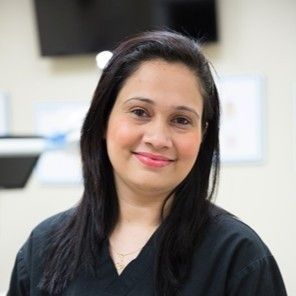
Dr. Deepika Verma
Dr. Deepika Verma is a dentist serving the DFW, TX community. A graduate of New York University with a residency at New York Hospital Queens, she is a member of the American Dental Association and is passionate about patient-first, lifelong dental health.
Connect with Dr. Deepika Verma
Full-mouth dental implants cost $14,000 to $36,000 per arch, according to
ClearChoice's 2026 national cost guide, which puts a complete upper-and-lower restoration at roughly $28,000 to $72,000. That price covers the implants, the surgery, and a fixed set of new teeth, while extractions, bone grafting, sedation, and premium zirconia decide where your case lands inside the range.
The numbers themselves are less confusing than the way they get presented. This page works through them the way an accountant would: tier by tier, quote by quote, visit by visit.
Want a written figure for your own mouth instead of a national range? Call Spark Dental at (817) 962-7072.
$8,289 per Arch Buys the Entry Tier
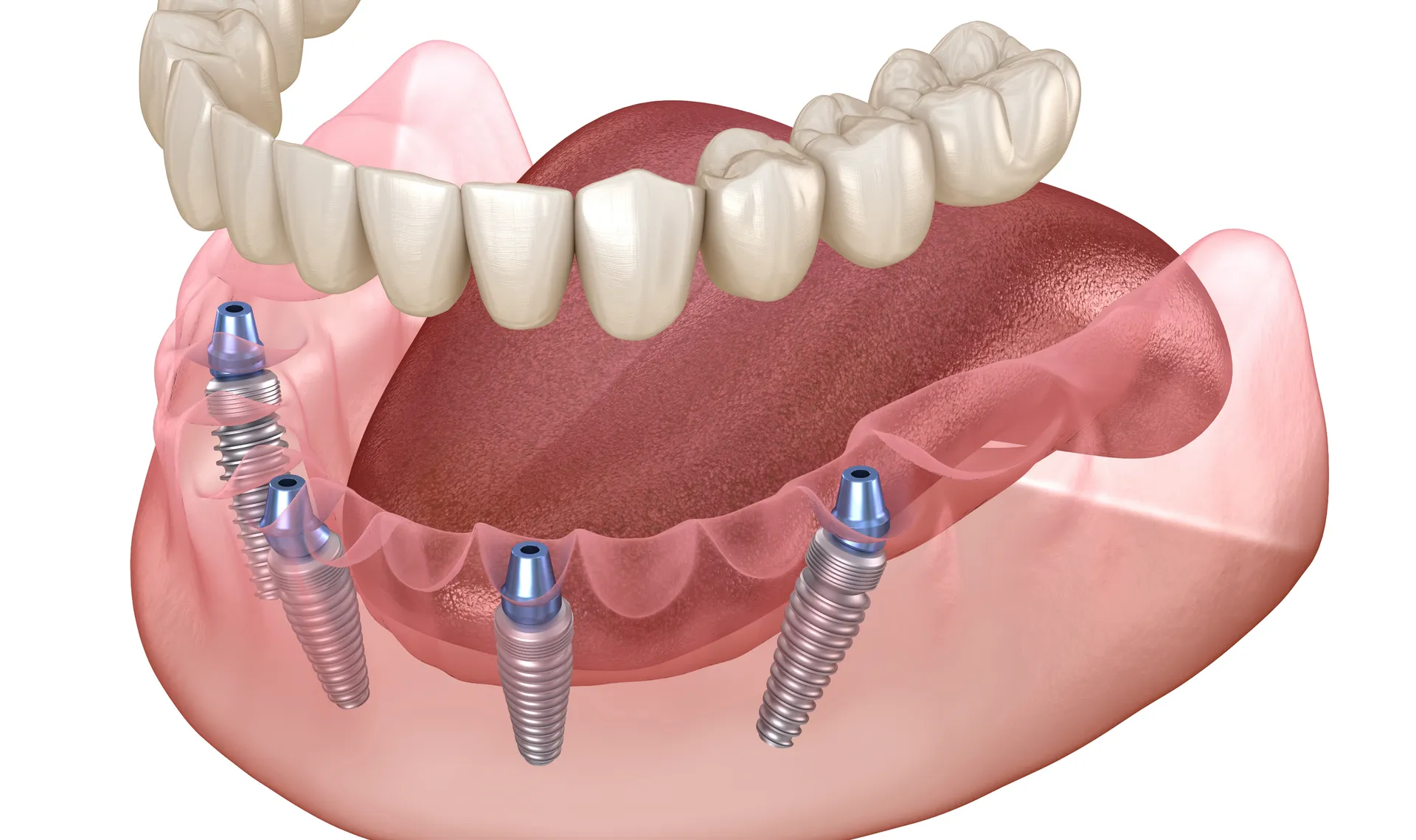
The lowest rung of full-mouth treatment is the implant denture, averaging $8,289 per arch on
Aspen Dental's published 2026 internal pricing, with a spread of $7,628 to $13,297. A small set of posts anchors a removable appliance that snaps in for the day and comes out for cleaning at night.
That removability is the discount. Fewer implants, a lighter framework, and less lab time keep the fee well under a fixed arch, in exchange for a prosthesis you still take out and hardware inserts that wear with use.
The entry tier earns its keep for patients moving up from a loose conventional denture on a tighter budget, and it can later act as a stepping stone while you save toward a fixed arch.
Fixed Arches Run $14,000 to $36,000 Each
A fixed full-arch restoration, teeth screwed permanently to the implants, costs $14,000 to $36,000 per arch, and most of the cost of full-mouth dental implants concentrates in this tier. The added posts, the reinforced framework, and the lab hours behind a set of teeth that never leaves your mouth account for the premium over a snap-in appliance.
Doubling covers both jaws. Two fixed arches put a complete set of new teeth between roughly $28,000 and $72,000, so a five-figure plan for a whole mouth is arithmetic, not a warning sign.
One phrase hides two shopping lists. Some patients pricing a full mouth need two fixed arches, others need one fixed arch opposite healthy natural teeth, and a few are really weighing a fixed arch against upgrading an existing denture. Name which mouth you are pricing before you collect quotes.
Every figure above is a national midpoint, not a promise. Your jawbone, your remaining teeth, and your material choices set the real number, and no honest practice can name it before an exam. If a fixed arch is still competing against a bridge, a partial, or a single implant in your head, our guide to
choosing the tooth replacement that fits your mouth and your budget
lines up all four paths.
The $10,000 Illusion Between Two Quotes
Two full-mouth quotes can sit $10,000 apart while describing nearly the same surgery, because each practice folds different line items into the number it advertises. Decode the format before you judge the figure. The table below translates the four most common formats and pairs each with the one question that makes any two quotes comparable.
| How the price is framed | What the figure usually covers | What it often leaves out | Ask this before you compare |
|---|---|---|---|
| A per-implant starting price | The titanium post and its surgical placement | The connectors, the arch of teeth, extractions, imaging, and sedation | What does the finished arch cost, all in? |
| A per-arch package price | Implants, surgery, and one set of teeth | Whether that set is the temporary bridge or the final one, plus any grafting | Does this cover both the provisional and the final teeth? |
| An all-in full-mouth total | Both arches, from imaging through final teeth | The material tier behind the number, acrylic hybrid or zirconia | Which material is priced here, and what would upgrading add? |
| A low monthly payment | A financed slice of one of the totals above | The full principal, the term length, and the interest after any promotional period | What is the total repaid over the life of the plan? |
Restate every quote as an all-in figure for the same material and the same number of arches, and the comparison usually shrinks from shocking to sensible. Seasonal discounts and trade-in credits complicate it further, since money off an unstated list price tells you nothing until the all-in figure lands in writing.
Surgery Day Carries Most of the Bill
Spread across the calendar, full-mouth spending stacks up unevenly: a modest consultation, a heavy surgical day, quiet healing months, then a final visit where the material decision lands.
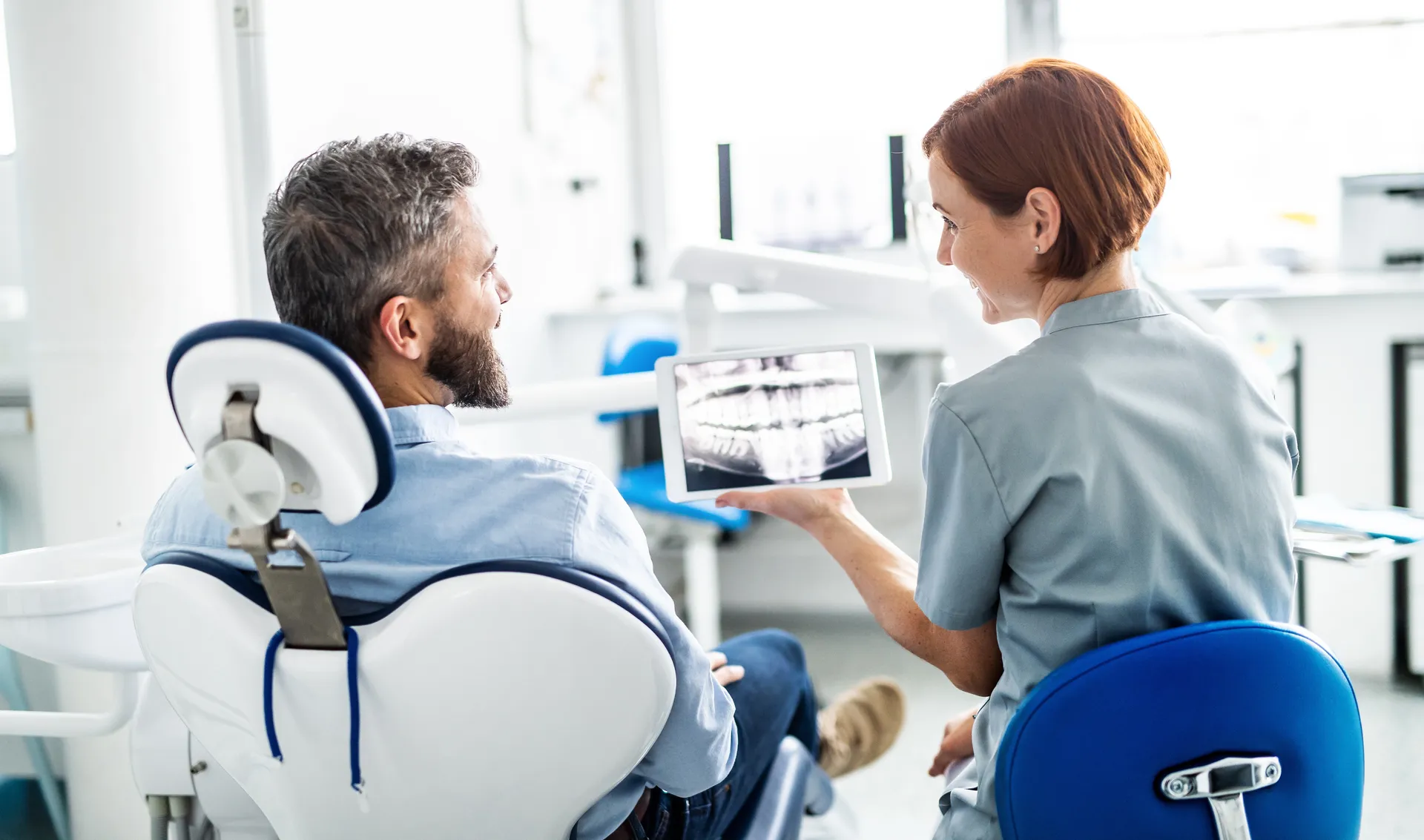
The consultation is the smallest line and the most consequential. Digital X-rays and intraoral scans measure your bone and count the teeth that must go, and that imaging decides whether grafting belongs on your plan at all. Full-arch designs that angle the rear implants into denser bone let many patients skip grafting entirely, a finding that can subtract thousands, and one reason our
All-on-4® full-arch treatment suits so many long-time denture wearers.
Then comes the expensive day. Failing teeth come out, implants go in, sedation runs its course, and a provisional set of teeth is attached before you leave. Each removal bills as its own line, so sixteen condemned teeth cost more chair time than a jaw that surrendered them years ago; our
in-house tooth extractions keep that stage on the same estimate as the implants. IV sedation adds more than local anesthetic, and six posts add more than four.
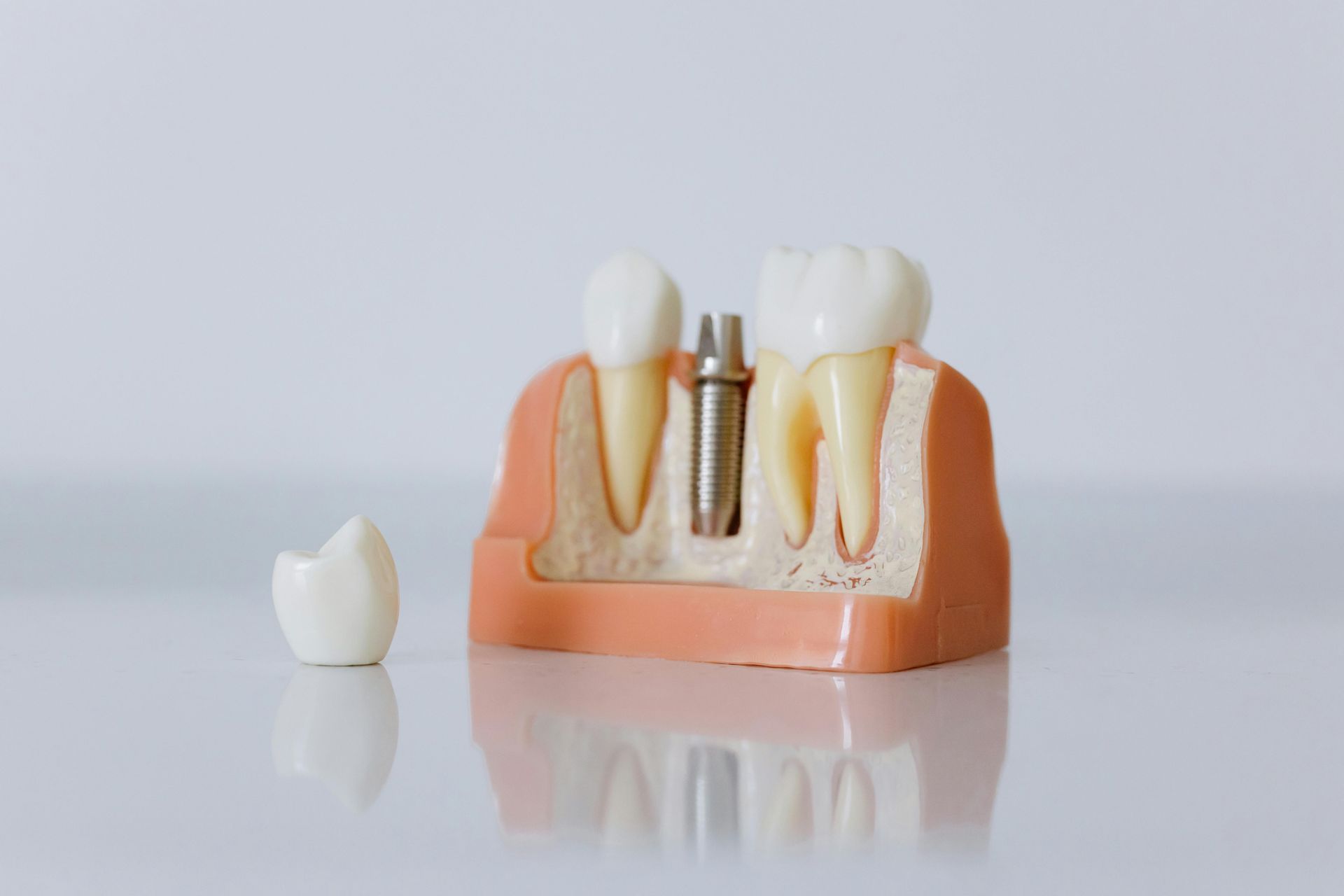
Healing asks little beyond checkups. The final visit settles the widest variable: an acrylic hybrid arch costs less and repairs easily, while milled zirconia costs more upfront and shrugs off wear and staining. That single line usually decides whether an arch sits near $14,000 or climbs toward $36,000.
Two sets of teeth appear on most fixed-arch plans, the provisional bridge worn while bone fuses to the implants and the final arch built afterward. Confirm both live inside your quote, because a plan that prices only one of them is a plan with a surprise waiting.
Insurance Pays a Slice, Never the Bulk
Typical dental policies cap yearly benefits at an amount measured in the low thousands, so even a cooperative plan covers a fraction of a five-figure arch. A pre-treatment estimate sent to your insurer turns a vague maybe into an exact contribution before you commit, and most patients bridge the rest with financing, sequencing, or both.
Cost already steers dental decisions nationwide.
Federal Reserve survey data compiled by USAFacts in May 2026 found that 18% of American adults skipped dental care in 2025 because of the price, more than any other type of medical care. Financing exists precisely so a health decision is not decided by a lump sum: our
in-office payment plans spread the remaining balance into monthly installments after your benefits are applied.
Sequencing is the quietest savings lever. Restoring the arch that troubles you most now and the second arch later splits the outlay across time without splitting the quality of either result. Keep the paperwork honest, too: any figure quoted over the phone or from a photo is a guess, and a guess is not a document your budget can rely on.
Written, Itemized, Signed: Pricing at Spark Dental
Spark Dental builds every full-mouth estimate the same way: a real exam, digital X-rays, and detailed intraoral scans, then a written, itemized treatment plan you approve before anything is scheduled. Dr. Deepika Verma, an NYU-trained dentist and American Dental Association member, plans implants, full-arch treatment, extractions, and denture alternatives under one roof, so your estimate and your surgery come from the same team rather than three offices with three separate bills.
Our front office confirms your dental benefits in writing before treatment begins, and families reach us from North Richland Hills, Richland Hills, Hurst, Bedford, Haltom City, Watauga, Colleyville, and Fort Worth. Every consultation ends the same way: you leave holding the tiers, the materials, the timeline, and the total for your own mouth. Reach us Monday, Tuesday, Thursday, and Friday from 8:30 am to 4:00 pm, with Wednesday and Saturday visits by appointment.
Five Sticking Points, Settled
The same five doubts stall most pricing conversations, and each resolution below stands on its own.
A $50,000 quote usually signals both arches
Fixed full-arch treatment runs $14,000 to $36,000 per arch nationally, so a two-arch plan lands anywhere between $28,000 and $72,000, and premium zirconia or a long list of extractions pushes totals past $50,000. Judge any figure by its itemized contents, not the headline.
Overseas surgery is cheaper until the follow-up
The surgical fee abroad is often lower, but the honest comparison is total cost of care: flights, lodging, return trips for adjustments, and who manages a complication once you are home. Warranties rarely cross borders, so price the whole journey, including local follow-up, before deciding.
Material choice widens per-arch quotes more than surgery does
A milled zirconia arch carries a higher lab fee than an acrylic hybrid, and that single line often explains most of the gap between two per-arch quotes. Acrylic costs less upfront and repairs easily, while zirconia resists wear and staining over the long run.
Medical insurance steps in only for rare cases
Coverage appears in limited situations, usually when tooth loss stems from an accident, a tumor, or another covered medical event, and approval is decided case by case. Most patients combine dental benefits, financing, and pre-tax health accounts instead, and every coverage answer belongs in writing before surgery is booked.
Upkeep costs mirror normal dental care
Plan for the same rhythm as natural teeth: professional cleanings and checkups a few times a year, plus occasional replacement of small attachment parts on removable versions. There are no relines or adhesives to rebuild, and steady maintenance is what protects a five-figure restoration for the long term.
Your Number Comes From a Scan, Not a Screen
The only full-mouth implant price worth planning around is the one written after an exam and digital imaging, itemized for your jaw, your materials, and your timeline. Bring your insurance card and your hardest questions, and expect straight answers on tiers and totals before anyone asks you to commit.
Ready to trade a national range for your own number? Call Spark Dental at (817) 962-7072, visit Dr. Deepika Verma and our team at 7259 Boulevard 26, North Richland Hills, TX 76180, or reserve your consultation online, and leave knowing exactly what your new smile will cost.