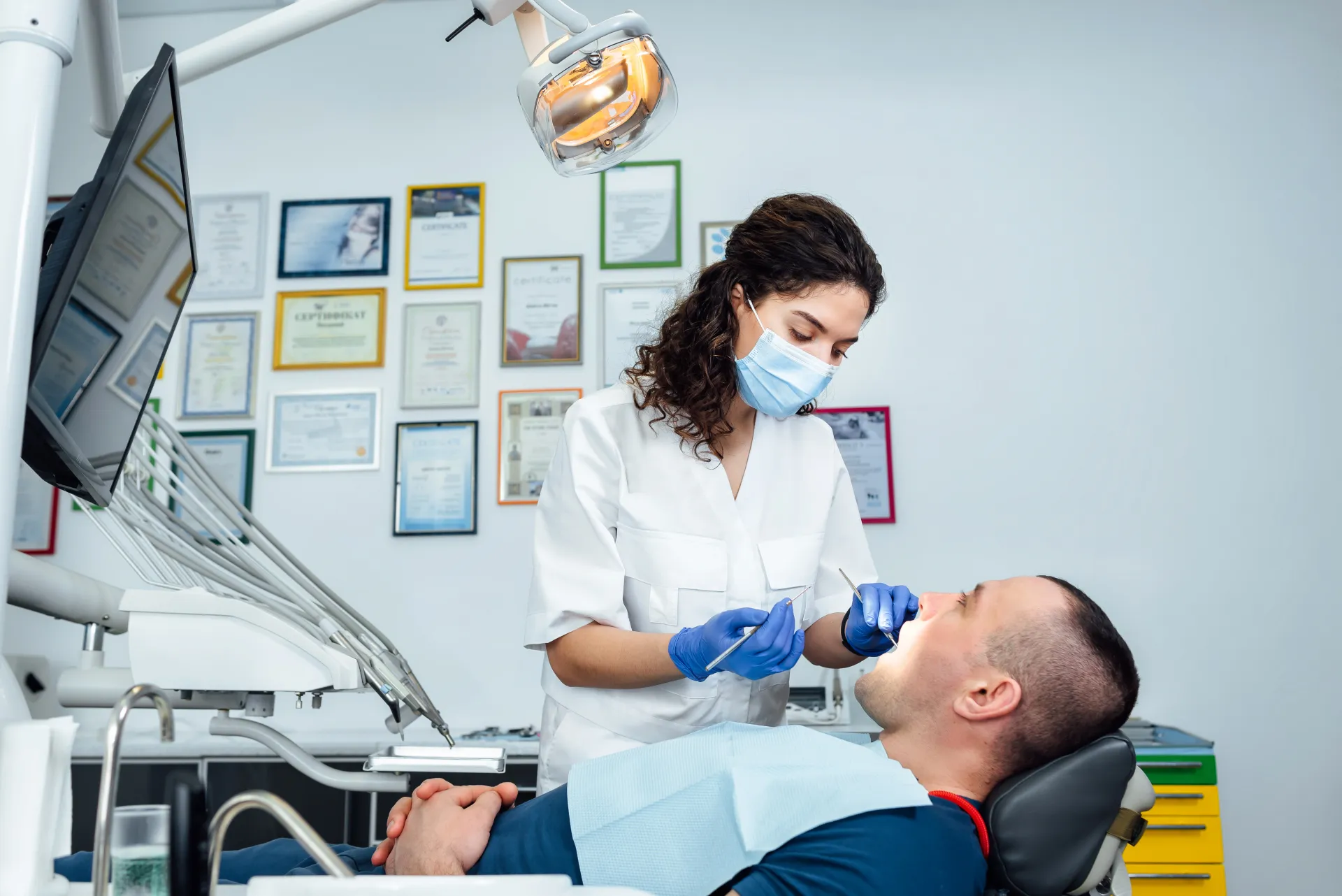
Are All-on-4 Implants the Best Fix for a Full Arch of Teeth?

August 19, 2026
Dr. Deepika Verma
Written by

Dr. Deepika Verma

Dr. Deepika Verma is a dentist serving the DFW, TX community. A graduate of New York University with a residency at New York Hospital Queens, she is a member of the American Dental Association and is passionate about patient-first, lifelong dental health.

Connect with Dr. Deepika Verma
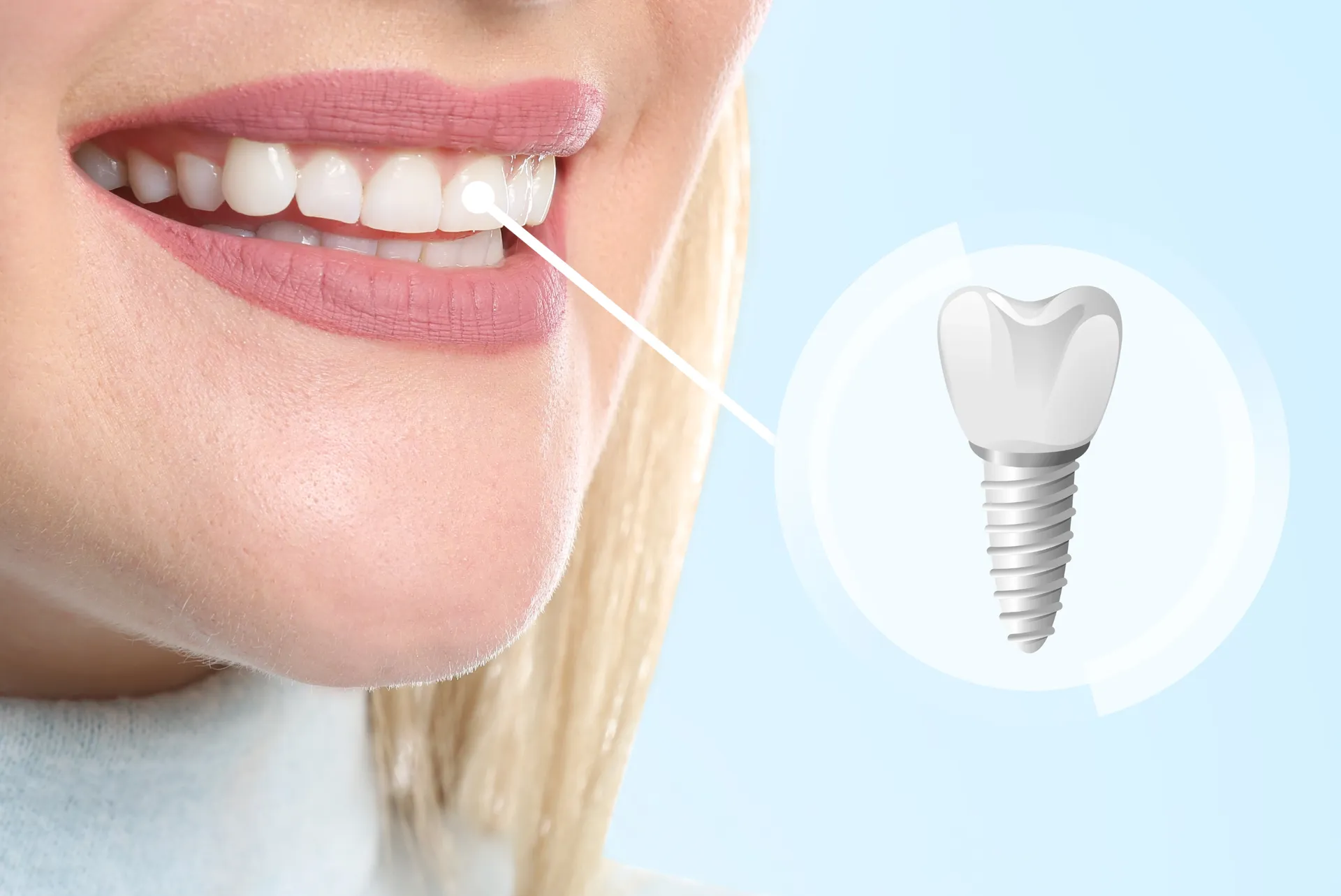

All-on-4 implants are the best full-arch fix for most people missing all or most teeth in one jaw, anchoring a complete fixed bridge on four implants placed in a single visit. A 2026 systematic review of 55 studies in the
International Journal of Oral and Maxillofacial Surgery found 98.14 percent implant survival at five years and beyond.

"Best for most" is not "best for all," though, and the difference comes down to your bone, your health history, and how you want your new teeth to live in your mouth.

Wondering where you land? Call Spark Dental at (817) 962-7072 for an All-on-4® evaluation with Dr. Deepika Verma.

How the All-on-4 Technique Works

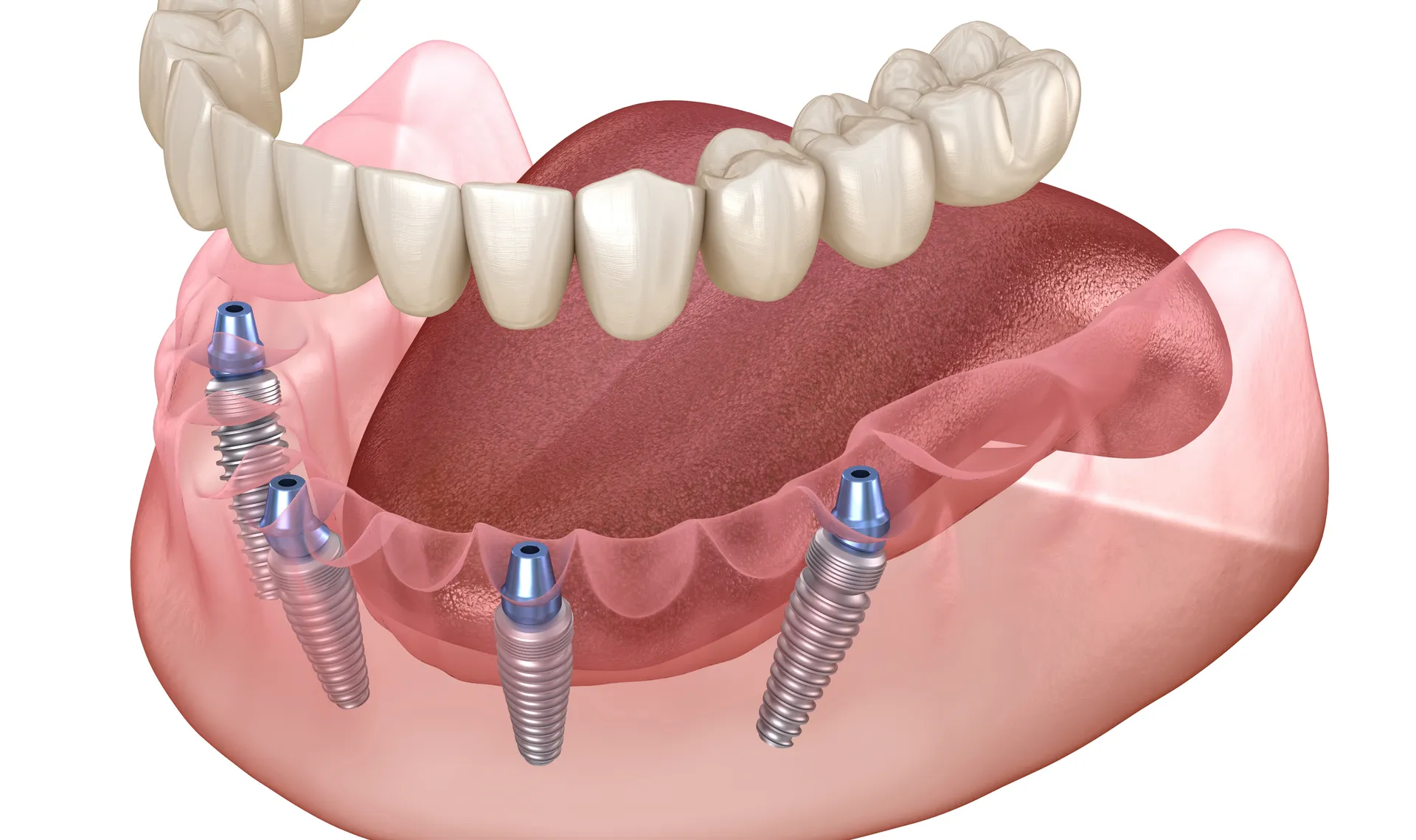
All-on-4 dental implants replace an entire arch of teeth with one fixed bridge supported by only four titanium posts: two placed upright near the front of the jaw and two tilted at the back to grip the densest available bone. That tilt is the whole trick, because it lets the implants reach strong bones that straight placement would miss.

The payoff shows up in three ways. The bridge is screwed to the implants, so it never slips, lifts, or soaks in a cup overnight. Placement in naturally denser bone means many patients skip grafting entirely. And because the four posts share the load of a full arch, a temporary fixed set of teeth can be attached the same day the implants go in.

Daily life changes with the format too. The bridge sits clear of the roof of the mouth, so food tastes the way it should, speech stays crisp, and there is no adhesive, no soaking cup, and nothing to take out at night.

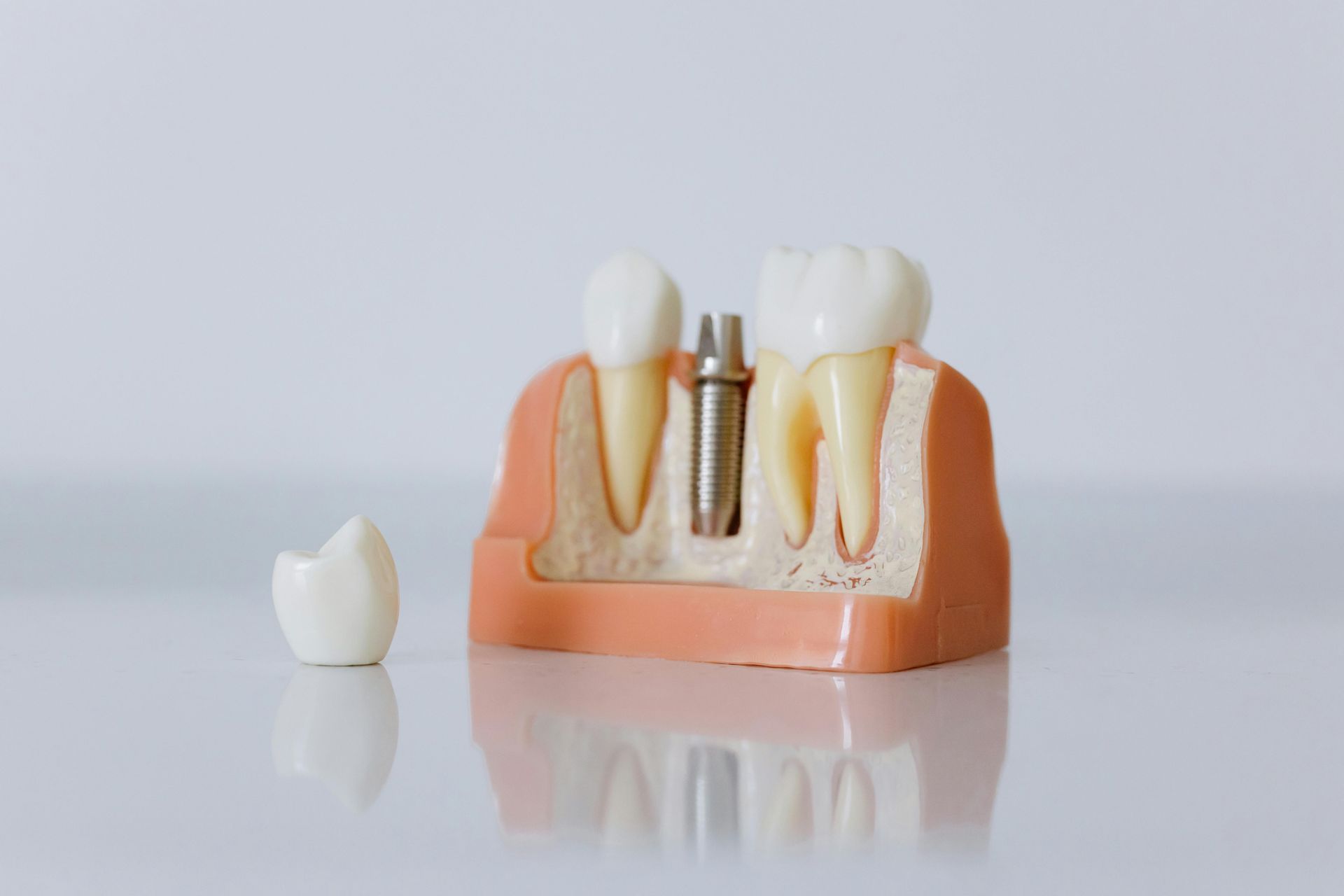
Full arch dental implants of this kind also work below the gumline. Like a natural tooth root, each post stimulates the jaw as you chew, which helps slow the bone shrinkage that follows tooth loss and hollows the lower face over time.

All-on-4 Success Rates: What the Evidence Shows

All-on-4 implants work at survival rates above 98 percent across pooled clinical studies, which places the technique among the most predictable treatments in modern dentistry. The 2026 meta-analysis cited above tracked outcomes across three windows: 99.20 percent implant survival at one year, 99.66 percent between one and five years, and 98.14 percent at five years or longer, with average bone loss around the implants of just over one millimeter at five years.

Put plainly, of every 100 implants placed this way, roughly 98 are still doing their job five years on. The bone figure matters just as much, because implants that keep the surrounding bone stable are implants positioned to last.

Precision at the planning stage supports those numbers. A 2024 study in the Journal of Clinical Medicine, its date worth noting, reported that guided All-on-4 surgery built on the technique's record of high survival and low bone loss by mapping implant positions digitally before a single incision.

Strong odds are still odds, not promises. Individual results depend on your health, your habits, and your home care, which is exactly what a proper evaluation sorts out before anyone recommends surgery.

Good Candidates for All-on-4, and Who Should Wait

Good All-on-4 candidates are adults who have lost most or all of the teeth in one arch, are tired of a loose denture, or face extractions of teeth that can no longer be saved. The technique was designed for jaws that have already lost bone, so years of denture wear or long-standing gaps rarely rule you out on their own.

Some situations call for a different plan first. Active gum infection needs treatment before implants go in, heavy smoking and uncontrolled diabetes slow the healing that implants depend on, and severe bone loss in the upper jaw sometimes needs bone grafting or additional implants before a fixed arch is safe.

Your wider health history counts as well. Certain medications and medical conditions change how bone heals around an implant, so we review everything you are taking and treating before a plan is set.

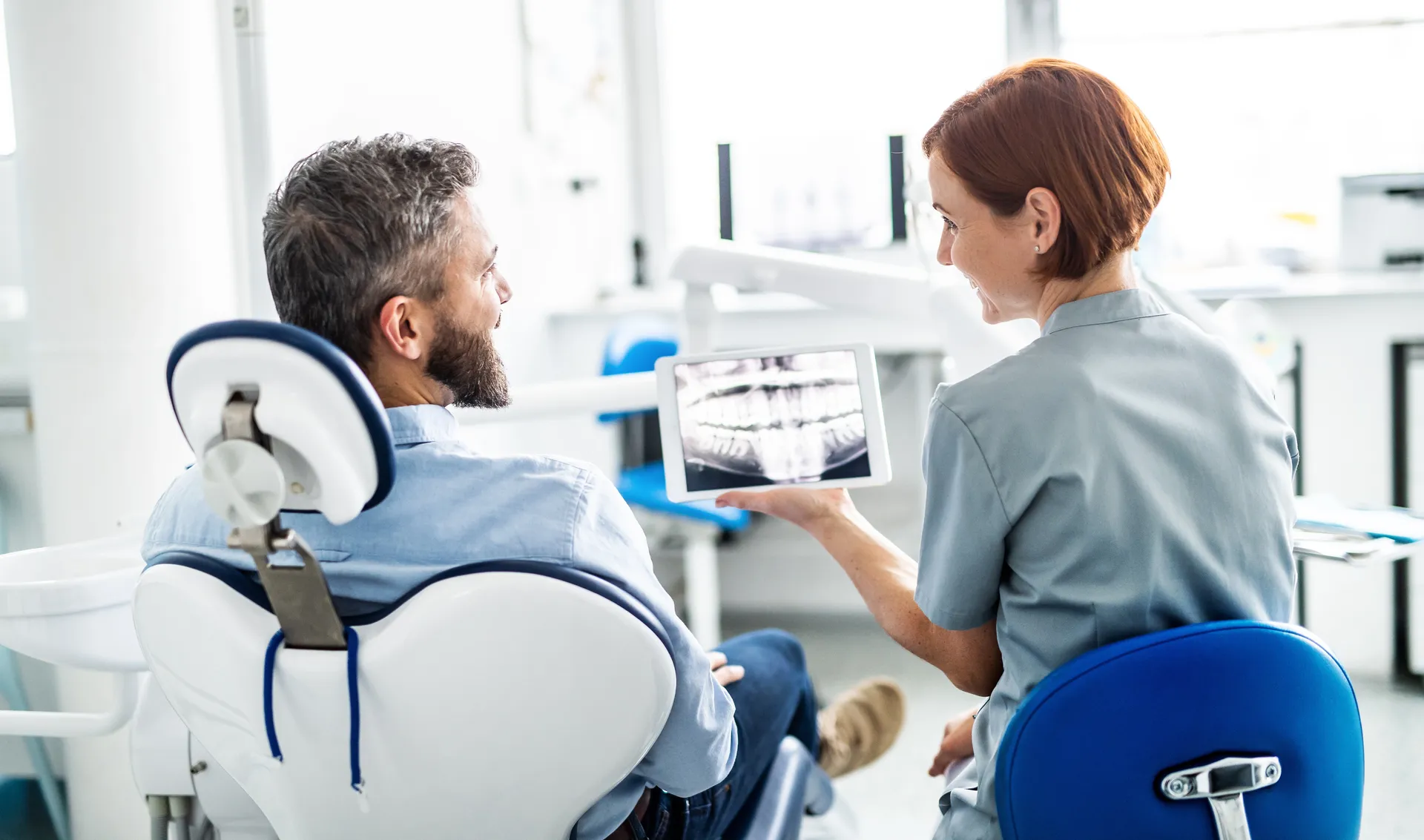
None of that is a self-diagnosis exercise. Digital X-rays and 3D-accurate intraoral scanning show exactly how much bone you have and where it sits, which is how we tell you whether four implants are enough on the first visit.

All-on-4 vs. Dentures and Other Full-Arch Dental Implants

All-on-4 outperforms removable options on stability and chewing power, while its closest rival, All-on-6, delivers statistically similar survival with two extra implants. In the same 2026 review, All-on-6 survival ran 100 percent at one year and 97.50 percent long term, so the choice between four and six posts rests on your bone, not on one being safer than the other.

That parity carries a practical lesson: paying for two extra implants buys additional anchorage where the jaw needs it, not an extra margin of safety where it does not.

Here is how the four full-arch paths compare on the questions patients actually weigh:


Full-arch option Implants used Fixed or removable Is grafting usually needed? Teeth the same day? Chewing strength Best fit when
All-on-4® fixed bridge 4, with tilted rear posts Fixed, stays in Often avoided through angled placement Yes, a fixed temporary bridge Close to natural teeth Most or all teeth failing and you want teeth that never come out
All-on-6 fixed bridge 6 or more Fixed, stays in Sometimes, needs more implant sites Case by case Close to natural teeth Bone volume supports extra anchors
Implant-retained overdenture 2 to 4 Removable, snaps on and off Sometimes No, arch fits after healing Stronger than a denture, below fixed You accept nightly removal for a lower entry point
Traditional full denture 0 Removable No surgery involved Not applicable Lowest of the four Surgery is off the table for now


Price sits deliberately outside this table, because it deserves its own full discussion. Our side-by-side
comparison of every tooth replacement option and its cost covers the numbers, and full or partial dentures remain a respectable route when a fixed arch is not the right move yet.

The All-on-4 Process at Spark Dental

The All-on-4 process at Spark Dental runs in three stages: computer-guided planning, one surgical visit with same-day temporary teeth, and a final fixed arch once the bone has healed. Dr. Deepika Verma, an NYU-trained dentist and American Dental Association member, uses guided technology to map where your bone is strongest before placing a single implant.

The diagnostic stack does the heavy lifting up front. Digital X-rays and iTero and Medit 3D scanning capture an exact model of your arch and bone, so the surgical guide reflects your anatomy rather than an estimate of it.

On surgery day, the four posts go in at those planned positions and a temporary fixed bridge is attached before you leave, so you never walk out without teeth. Over the next few months, the bone grows around each titanium post the way it would around a natural root.

Once that fusion is complete, your final full-arch bridge is secured to the implants. From there, care looks refreshingly ordinary: brush twice a day, keep your professional maintenance visits, and let us check the hardware and your bone levels at each appointment through our All-on-4®implant treatment program.

FAQs

Does getting All-on-4 implants hurt?

The procedure itself is done under local anesthetic, so you should feel pressure rather than pain while the implants are placed. Guided planning keeps the surgery minimally invasive, and most soreness afterward is managed with standard post-operative care. Discomfort varies from person to person, and we plan your comfort options with you beforehand.

How do you clean All-on-4 teeth?

Clean All-on-4 teeth by brushing twice a day and cleaning under the bridge with the tools we recommend, such as a water flosser or special floss threaders. Professional maintenance visits complete the routine: at each one, we inspect every component of the implant system and check your bone levels to stay healthy.

Can All-on-4 implants fail, and what raises the risk?

Yes, a small percentage of All-on-4 implants fail, most often from infection around an implant, smoking, uncontrolled diabetes, or heavy nighttime grinding. Long-term studies put survival above 98 percent, and the risks that remain are largely manageable: gum health, glucose control, a night guard where needed, and consistent maintenance visits.

Are you without teeth while All-on-4 implants heal?

No, you are not left without teeth at any stage. A temporary fixed bridge is attached to your implants on the day of surgery, so you leave the office with a full arch in place. A softer diet protects the implants while bone fuses around them, then the final bridge takes over.

Can you get All-on-4 implants after years of wearing dentures?

Yes, long-term denture wearers are often strong All-on-4 candidates, because the technique was built for jaws that have already lost bone. The tilted rear implants anchor in the denser bone that remains. Where shrinkage is severe, imaging tells us whether grafting or added implants should come first.

How Do You Find Out if All-on-4 Is Right for Your Smile?

You find out whether All-on-4 fits your smile through a straightforward evaluation: an exam, digital imaging of your bone, and an honest conversation about the fixed and removable paths open to you. The evidence says four implants are enough for most full arches; your scan says whether that includes yours.

Dr. Verma and the Spark Dental team provide that evaluation under one roof at 7259 Boulevard 26 in North Richland Hills, serving Richland Hills, Hurst, Bedford, Haltom City, Watauga, Colleyville, and Fort Worth. Cost gets a straight answer at that same visit, with a written treatment plan and financing options that keep the decision about your health rather than the invoice. Call (817) 962-7072 or schedule your consultation online , and leave knowing exactly what your full-arch options look like.
Dental Implants Cost
By Deepika August 10, 2026
Dental implants can vary in cost depending on the type and treatment needed. Learn about dental implant costs and available options to choose the right solution.
August 5, 2026
Learn how much full, partial, and implant-supported dentures cost, what affects pricing, ongoing maintenance expenses, and ways to reduce out-of-pocket costs.
Dental Bridge Cost
By Amit Verma August 4, 2026
Learn what a porcelain or Maryland dental bridge costs, what affects pricing, and how to choose the best tooth replacement option for your smile.
Tooth Replacement
July 13, 2026
Compare tooth replacement options, costs, and lifespans. Learn about dental implants, bridges, dentures, and All-on-4 solutions to find the right choice.
June 23, 2026
A dental emergency is any mouth problem that needs prompt professional care to control bleeding, stop severe pain, save a tooth, or treat a spreading infection. Knowing the difference between a true emergency and a problem that can wait until morning protects both your teeth and your budget. This guide walks North Richland Hills families through what to do, what to avoid, and when to call. At Spark Dental , same-day slots are kept open for exactly these moments, because the first thirty minutes often decide the outcome. What Counts as a True Dental Emergency A handful of situations need attention within hours, not days. The clearest warning signs are severe or worsening pain, a knocked-out or loosened tooth, a cracked or broken tooth, facial swelling, bleeding that will not stop, and any mouth injury paired with a fever. Pain that keeps you awake, throbs, or radiates toward the jaw or ear usually points to an exposed nerve or an infection, and neither of those resolves on its own. When you are unsure, the safest move is a quick phone call to your dentist, who can triage your symptoms in a couple of minutes. Not everything that feels alarming is urgent, though. A small chip with no pain, a dull ache that comes and goes, or food wedged between two teeth can usually wait for a scheduled visit. The table below sorts the most common situations North Richland Hills families ask about. Emergency or Can It Wait? A Quick Reference Knocked-out adult tooth Emergency: within 30 to 60 minutes Keep it moist in milk, then call right away Severe toothache with facial swelling Emergency: same day Likely infection; call your dentist now Cracked or broken tooth with pain Urgent: same or next day Rinse with warm water, use a cold compress, call Lost filling or crown, mild discomfort Urgent: 1 to 2 days Cover the area with dental wax, then call Chipped tooth, no pain Routine Book a regular appointment Dull ache that comes and goes Routine Schedule an exam to find the cause Object stuck between teeth Self-care first Floss gently; call if it does not clear What to Do If a Tooth Is Knocked Out A knocked-out permanent tooth is one of the few dental injuries where minutes genuinely matter. According to the American Association of Endodontists , more than five million teeth are knocked out every year in children and adults, and many of them can be saved with fast, correct handling. The steps are simple but specific. Pick the tooth up by the crown, which is the chewing surface, and never touch the root. Rinse it gently with water or milk to remove dirt, but do not scrub it, dry it, or wrap it in tissue. If you can, place it back in the socket and bite down on clean gauze to hold it. If reseating it is not possible, keep it moist: the ADA recommends storing it in milk, tucking it between your cheek and gums, or using a tooth-preservation product that carries the ADA Seal of Acceptance. Then get to a dentist within thirty minutes if you can. Milk works better than tap water because its proteins and balanced pH help keep the root surface cells alive, and a tooth that has been out of the socket for less than an hour has the best chance of being replanted successfully. One important exception: a knocked-out baby tooth should not be put back, because that can damage the developing permanent tooth underneath. A successfully replanted adult tooth is often stabilized and may later need a root canal to stay healthy. Handling Other Common Emergencies Most dental injuries are not avulsions. The AAE notes that chipped and cracked teeth make up the majority of dental trauma, and how you respond in the first hour still matters. For a cracked or broken tooth, rinse your mouth with warm water, apply a cold compress to control swelling, and save any fragments. Depending on the damage, the tooth may be rebuilt with a tooth-colored filling or capped with a porcelain crown . For a lost filling or crown, cover the exposed area with dental wax or sugar-free gum and avoid chewing on that side until you are seen. Facial swelling or a painful, pimple-like bump on the gum can signal an abscess, which is a serious infection that will not clear without treatment and can spread if ignored. Rinse with warm salt water for temporary relief, never try to lance it yourself, and call the same day. Gum-related infections are treated with periodontal therapy alongside any urgent care. If you bite your lip, tongue, or cheek, clean the area, apply gentle pressure with gauze, and use a cold compress. One more tip from the ADA: never place aspirin directly on a sore tooth or gum, since it can burn the soft tissue. When to Go to the ER Instead A dentist is the right place for almost every tooth problem, but a few situations call for a hospital emergency room first. Go straight to the ER if swelling is affecting your breathing or swallowing, if it is spreading toward your eye or down your neck, if bleeding will not stop, or if you have a suspected broken jaw or major facial trauma. The ER can manage swelling, bleeding, and pain and rule out a larger injury, but it cannot fix the tooth itself, so you will still need to follow up with a dentist to treat the underlying cause. How North Richland Hills Families Can Prevent Emergencies Many urgent visits are avoidable with a few simple habits. A custom sports mouthguard is the single best protection for active kids and teens, since falls and contact sports are a leading cause of knocked-out teeth in children ages seven to eleven. If you wake with jaw soreness or notice worn, sensitive teeth, ask about a night guard for teeth grinding , which quietly cracks molars over time. Beyond appliances, the basics still win. Avoid chewing ice, hard candy, and popcorn kernels, and never use your teeth to open packaging. Most important, keep up with twice-yearly checkups: a small cavity caught early becomes a quick filling, while the same cavity ignored becomes the 2 a.m. abscess. You can see the full range of family services Spark Dental offers, all under the care of Dr. Deepika Verma . Emergency Dental Care at Spark Dental When something does go wrong, you should not have to wait days for relief. Spark Dental offers 24/7 emergency dental care for families across North Richland Hills and the neighboring communities of Richland Hills, Hurst, Bedford, Haltom City, Watauga, Fort Worth, and Colleyville. Because Dr. Verma handles root canals, crowns, fillings, and extractions in-house, most urgent problems are solved in one place rather than shuffled between offices. That continuity matters in an emergency, when a calm, familiar team and a clear treatment plan make a stressful situation far easier to manage. Flexible payment plans and financing help make sure cost is never the reason you delay care. The clinic is located at 7259 Boulevard 26, North Richland Hills, TX 76180, and the team reserves same-day appointments for genuine emergencies. If you are in pain right now, call (817) 962-7072 or request an appointment online , and describe your symptoms so the team can prioritize your visit. Frequently Asked Questions What is considered a dental emergency? A dental emergency is any problem that needs prompt care to stop severe pain, control bleeding, save a tooth, or treat infection. Knocked-out teeth, cracked or broken teeth, severe toothaches, and facial swelling all qualify. Minor chips with no pain and dull, occasional aches can usually wait for a scheduled visit. Should I go to the ER or a dentist for severe tooth pain? For most tooth pain, call a dentist first, because an emergency room can prescribe antibiotics and pain relief but cannot treat the tooth. Go to the ER only if swelling affects your breathing or swallowing, bleeding will not stop, or you have a suspected broken jaw or major facial injury. What should I do if my child knocks out a tooth? For a permanent tooth, hold it by the crown, rinse it gently, try to place it back in the socket, and keep it moist in milk if you cannot. See a dentist within thirty minutes. A knocked-out baby tooth should not be reinserted, since that can harm the permanent tooth growing underneath, but you should still call your dentist. How fast do I need to see a dentist for a broken tooth? A broken tooth with pain, sharp edges, or bleeding should be seen the same or next day to prevent infection and further damage. Rinse with warm water, use a cold compress, save any pieces, and avoid chewing on that side until your appointment. Does Spark Dental offer emergency dental care near me? Yes. Spark Dental provides 24/7 emergency dental care in North Richland Hills, TX, and the surrounding area, with same-day appointments for urgent problems. Call (817) 962-7072 or request an appointment online to be seen quickly by Dr. Deepika Verma and the team.
June 9, 2026
Learn the real cost of wisdom tooth extraction in NRH, including consultation, X-rays, procedure fees, and recovery expenses from start to finish.
 teeth grinding
June 2, 2026
North Richland Hills dentists can help manage sleep apnea and teeth grinding with custom treatments like oral appliances for better sleep and dental health.
May 27, 2026
Learn the signs you may need wisdom tooth extraction in North Richland Hills, treatment costs, recovery tips, and when to visit a dentist.
May 20, 2026
Find the right family and oral dentistry practice in North Richland Hills, TX. Learn what to look for in care, convenience, trust, and emergency support.
April 27, 2026
Need after-hours emergency dental treatment in North Richland Hills, TX? Learn where to get fast, reliable care for toothaches, injuries, and urgent dental needs.
Add your custom HTML here