Which Dental Insurance Plans Are Accepted by Dentists in North Richland Hills?
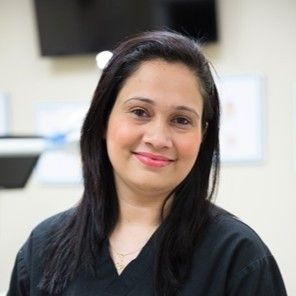
Dr. Deepika Verma
Dr. Deepika Verma is a dentist serving the DFW, TX community. A graduate of New York University with a residency at New York Hospital Queens, she is a member of the American Dental Association and is passionate about patient-first, lifelong dental health.
Connect with Dr. Deepika Verma
Dental offices in North Richland Hills accept different dental insurance plans, including PPO networks from providers such as Cigna, MetLife, Humana, and Blue Cross Blue Shield. The American Dental Association reports that 21% of US adults aged 19–64 have no dental benefits. Checking your network status and individual benefits before an appointment helps you understand your expected costs.
Choosing a dentist involves more than finding a convenient location. You also need to know whether your insurance covers the services you need, how much your plan pays, and what you must pay yourself.
At Spark Dental, we help patients understand their insurance options and discuss treatment costs before care begins. Call (817) 962-7072 to check your dental insurance.
Which Dental Insurance Plans Can You Use in North Richland Hills?
Dental insurance acceptance depends on the insurance carrier, network, and specific policy. A dental office may participate in a carrier's PPO network without accepting every plan that the carrier offers.
Several insurance providers appear on local dental practices' accepted insurance lists. These include:
- Cigna Dental
- Humana Dental
- Blue Cross Blue Shield (BCBS)
- Aetna
- Delta Dental
- Guardian
- MetLife
- Ameritas
- United Concordia
- Assurant
However, seeing an insurance company's name on a website does not automatically mean every policy from that company qualifies for in-network benefits.
How should you interpret these insurance listings? Check the exact plan name, network, and member ID with the dental office before scheduling. This helps prevent unexpected out-of-pocket expenses.
Does Spark Dental Accept Cigna Dental Insurance?
Cigna appears among the insurance provider logos displayed on our financial options page. Our practice also participates as a preferred provider (PPO) for many dental insurance companies.
However, Cigna offers different dental products and network arrangements. Your coverage depends on the specific policy and whether our office participates in its network.
If you have Cigna Dental, keep these details ready:
- Your Cigna member ID.
- The name of your dental plan.
- Your group or employer number, if applicable.
- Your policy's effective date.
- Your available annual maximum and deductible.
Our team can help check your insurance information and explain the coverage available for your planned dental treatment.
Does Spark Dental Accept Humana Dental PPO?
Humana appears among the insurance provider logos on our financial options page. However, Humana offers multiple dental plans, and participation can vary by network and policy.
If you have a Humana Dental PPO plan, confirm whether your particular policy includes our office as an in-network provider. Also, ask whether your planned treatment falls under preventive, basic, or major dental services.
Having a Humana PPO card does not guarantee the same reimbursement or patient cost across all dental procedures. Your policy determines the available benefits.
Can You Visit a BCBS PPO Dentist in North Richland Hills?
Blue Cross Blue Shield (BCBS) also appears among the insurance provider logos displayed on our financial options page.
BCBS dental coverage can vary by state, employer, network, and policy. Therefore, you should verify the exact network associated with your membership rather than relying only on the BCBS name.
Before scheduling, confirm:
- Whether your policy includes dental benefits.
- Whether your plan uses a PPO network.
- Whether the dental office participates in your specific network.
- Whether your treatment requires prior authorization.
- What deductible or coinsurance applies.
This information helps you understand the financial arrangements before beginning treatment.
What Is the Difference Between In-Network and Out-of-Network Dental Care?
In-network dental care generally provides access to negotiated fees, while out-of-network care may involve higher patient costs or different reimbursement rules.
Understanding this distinction helps you compare dental offices and make informed decisions about your coverage.
| Comparison factor | In-network dental care | Out-of-network dental care |
|---|---|---|
| Provider agreement | Dentist has an agreement with the applicable network | Dentist has no participation agreement with that network |
| Negotiated fees | Contracted fees generally apply | Provider fees may differ |
| Patient payment | Often follows the plan's negotiated fee structure | May involve higher out-of-pocket costs |
| Reimbursement | Follows in-network benefit rules | Follows out-of-network benefit rules |
| Balance billing | Generally restricted by network agreements | May apply depending on the plan and state rules |
| Plan restrictions | Network-specific conditions apply | Out-of-network reimbursement limits may apply |
PPO insurance usually gives patients more provider choice than restrictive network arrangements. However, out-of-network benefits are not guaranteed, and some plans may have no out-of-network coverage.
Ask your insurance company whether your policy allows out-of-network visits and whether it calculates reimbursement using a usual, customary, and reasonable fee schedule.
Choosing the right dental office also involves considering factors beyond insurance coverage, such as the dentist's experience, available services, and approach to patient care. Read our guide on what to look for when choosing a dentist in North Richland Hills to understand what matters when selecting a dental practice.
What Should You Check Before Using Your Dental Insurance?
You should check five important policy details before scheduling a dental appointment: deductible, annual maximum, coinsurance, waiting periods, and treatment exclusions.
These details determine how much your insurance may contribute and how much you may need to pay.
- Annual maximum: This is the maximum amount your dental insurance pays toward covered services during a benefit year. Once you reach this limit, you may need to pay additional treatment costs yourself.
- Deductible: This is the amount you must pay toward eligible services before your insurance begins contributing. Some plans waive deductibles for preventive services.
- Coinsurance: This is the percentage of an approved treatment cost that you must pay after applicable deductibles. The percentage can vary between preventive, basic, and major procedures.
- Waiting periods: Some policies require you to wait before receiving coverage for certain treatments. This restriction commonly applies to basic or major procedures, depending on the policy.
- Exclusions and limitations: Your plan may exclude specific treatments or limit how often you can receive certain services. Missing-tooth clauses, frequency restrictions, and replacement limitations may also affect benefits.
Checking these details before treatment helps you understand your financial responsibility.
How Do Dental PPO Plans Cover Different Treatments?
Dental PPO plans usually divide services into preventive, basic, and major treatment categories. Each category can have a different reimbursement percentage, deductible requirement, or coverage limitation.
Your exact benefits depend on your policy. The following table explains how these categories generally work.
| Dental service category | Common treatments | What to check |
|---|---|---|
| Preventive care | Routine examinations, cleanings, and eligible X-rays | Cleaning frequency and examination limits |
| Basic procedures | Fillings and certain extractions | Coinsurance and deductible |
| Major procedures | Crowns, bridges, and dentures | Waiting periods and reimbursement percentage |
| Orthodontic care | Braces and other eligible alignment treatments | Lifetime maximum and age restrictions |
Some plans cover eligible preventive services at a higher percentage than restorative procedures. However, you should never assume that a particular service receives full coverage.
For instance, your policy may cover routine examinations but apply a different benefit percentage to a crown or root canal. It may also require prior authorization before certain treatments.
What happens when your insurance does not cover the full treatment cost? You generally pay the remaining patient responsibility, which may include deductibles, coinsurance, non-covered services, or amounts above your annual maximum.
Ask your insurance provider for a written explanation of benefits (EOB) when you need clarification about a claim. An EOB explains how the insurer processed a submitted claim, what it paid, and what amount remains your responsibility. It is not necessarily a bill.
How Can You Verify Your Dental Insurance Before an Appointment?
You can verify your dental insurance by contacting your insurer or asking the dental office to help check your benefits. Both options can help clarify network participation and expected treatment costs.
Follow these steps before booking:
Step 1: Find your insurance details.
Locate your dental insurance card and check the carrier name, member ID, group number, and customer service phone number.
Step 2: Identify your exact plan.
Ask your employer or insurance provider whether you have a PPO, HMO, or another type of dental plan. Also, confirm the network name associated with your policy.
Step 3: Confirm the dentist's network status.
Contact the dental office and ask whether it participates in your specific insurance network. Do not rely only on the carrier's name.
Step 4: Review your remaining benefits.
Contact your insurer to check your annual maximum, remaining balance, deductible, and applicable treatment coverage.
Step 5: Request a treatment estimate.
If you need restorative or major dental work, ask whether the dental office can submit a pretreatment estimate to your insurer. This can provide a clearer picture of the expected insurance payment and your share of the cost.
Step 6: Confirm your payment responsibility.
Discuss any estimated patient balance with the dental office before treatment begins. Remember that insurance estimates are not final payment guarantees. The insurer makes the final coverage decision when it processes the claim.
These steps can help you avoid misunderstandings about dental benefits and prepare for your appointment.
How Spark Dental Helps Patients Understand Their Insurance Options
At Spark Dental, we understand that dental insurance can feel complicated, especially when different policies have different deductibles, coverage limits, and network requirements.
Our team works with insurance providers to help patients understand their available benefits and claims. We are a preferred provider (PPO) for many dental insurance companies, and our financial options page displays several major insurance carrier logos, including Cigna, Humana, and Blue Cross Blue Shield.
Our approach focuses on three important areas:
- Insurance assistance:
We help you understand your policy information and determine whether your insurance may apply to your planned dental services.
- Treatment cost discussions:
We discuss available payment options and treatment costs before starting care. This gives you an opportunity to understand your expected financial responsibility.
- Flexible payment options: We accept cash, checks, and most major credit cards. We also work with CareCredit for eligible financing needs.
Our dental services include preventive care, family dentistry, cosmetic dentistry, tooth replacement, extractions, oral appliances, and orthodontics.
Dr. Deepika Verma leads the practice. She earned her dental degree from New York University, completed a general practice residency at New York Hospital Queens, and belongs to the American Dental Association.
If you need help understanding your benefits, call (817) 962-7072 or visit our
financial options page.
Frequently Asked Questions About Dental Insurance in North Richland Hills
1. Does a dentist accept all Cigna Dental PPO plans?
No. A dental office may participate in selected Cigna PPO networks without accepting every Cigna policy. Network participation and reimbursement depend on your specific plan. Contact the dental office with your member ID and plan name to confirm whether you qualify for in-network benefits.
2. Can I use Humana dental insurance if my dentist is out of network?
Possibly. Some Humana PPO policies provide out-of-network benefits, while others have different restrictions. Your reimbursement may also differ from in-network coverage. Contact Humana to check your policy's out-of-network provisions, deductible, and reimbursement limits before scheduling treatment.
3. Does Blue Cross Blue Shield PPO cover dental cleanings?
Many BCBS dental PPO policies include benefits for routine examinations and cleanings. However, coverage frequency, eligible services, and patient costs vary by policy. Check your benefit schedule to determine how many cleanings your plan covers and whether you have any remaining frequency limits.
4. What happens if I reach my dental insurance annual maximum?
Your insurer generally stops paying additional covered dental claims once you reach your annual maximum. You may need to pay for subsequent treatment yourself. Ask your dental office about treatment priorities, available payment arrangements, and whether you can schedule eligible procedures across different benefit years.
5. Can I visit a North Richland Hills dentist without dental insurance?
Yes. You can receive dental care without having an active dental insurance policy. You will generally pay the applicable treatment fees directly. Ask the dental office about accepted payment methods, financing arrangements, and estimated costs before scheduling your appointment.
Get Help Understanding Your Dental Insurance Before Booking
Understanding your dental insurance before an appointment helps you plan treatment costs, check network participation, and avoid unexpected expenses. Always confirm your exact policy benefits rather than assuming that a carrier name guarantees coverage.
At Spark Dental, we help patients understand available insurance options, discuss treatment costs, and review payment arrangements before care begins.
Whether you have Cigna Dental, MetLife,Humana Dental PPO, or BCBS PPO coverage, contact our team to check your specific plan.
Call (817) 962-7072 or visit us at 7259 Boulevard 26, North Richland Hills, TX 76180 to discuss your dental insurance options and schedule an appointment.